Catalog No.
FHD18110
Description
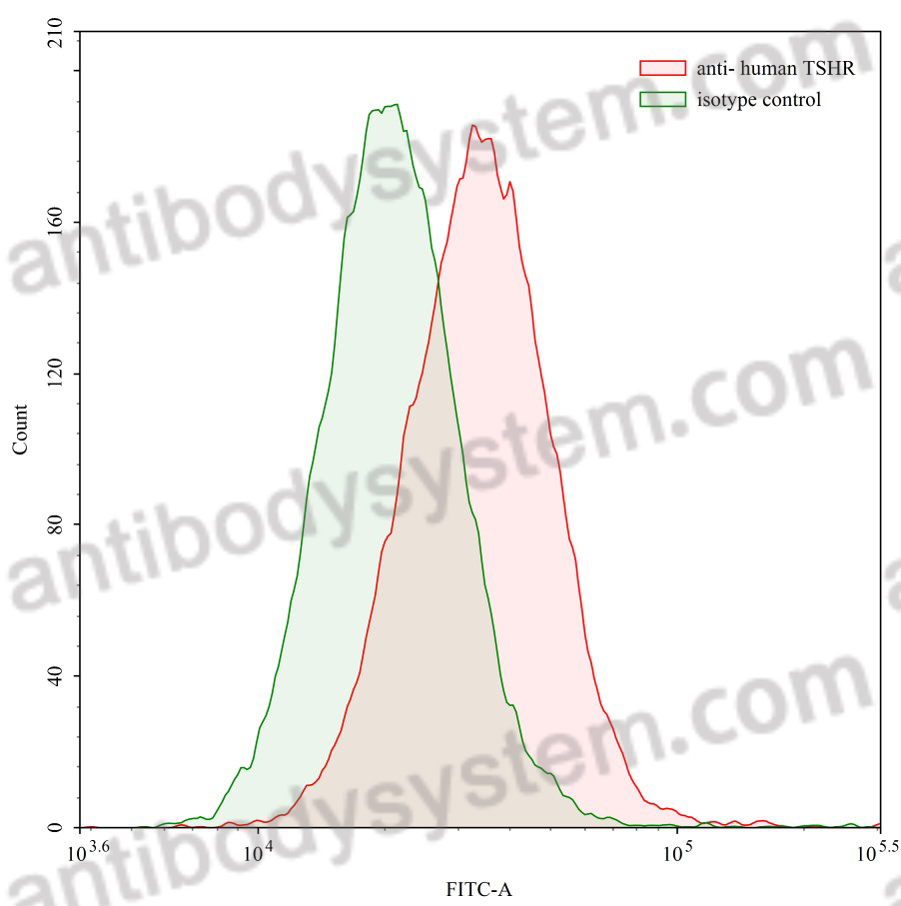
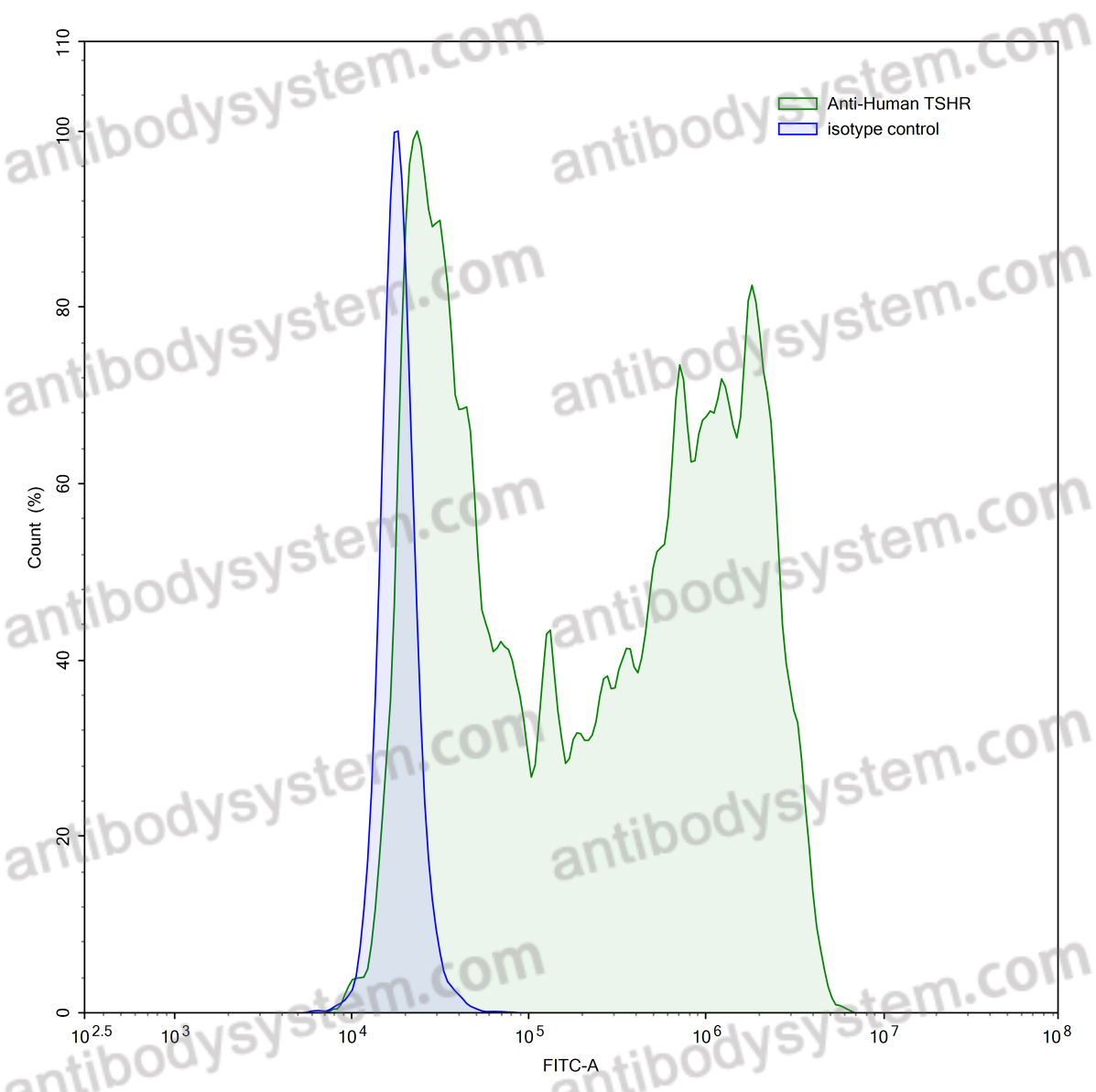
Anti-Human TSHR/LGR3 Antibody (M22, FHD18110) is a human monoclonal antibody targeting the Thyroid-Stimulating Hormone Receptor (TSHR/LGR3). Purified from mammalian cell culture supernatant, this antibody is validated for flow cytometry (FCM) and is suitable for receptor analysis, thyroid research, and TSHR-related immunology studies.
Product Features
● Purification: Protein A/G Purified
● Validated Application: Flow Cytometry (FCM)
● Research Use: Receptor characterization, thyroid and immunology studies
Species reactivity
Human
Host species
Human
Isotype
IgG1
Clonality
Monoclonal
Conjugation
Unconjugated
Applications
FCM
Target
Thyroid-stimulating hormone receptor, TSH-R, TSHR, Thyrotropin receptor, LGR3
Concentration
2.63 mg/ml
Endotoxin level
Please contact with the lab for this information.
Purity
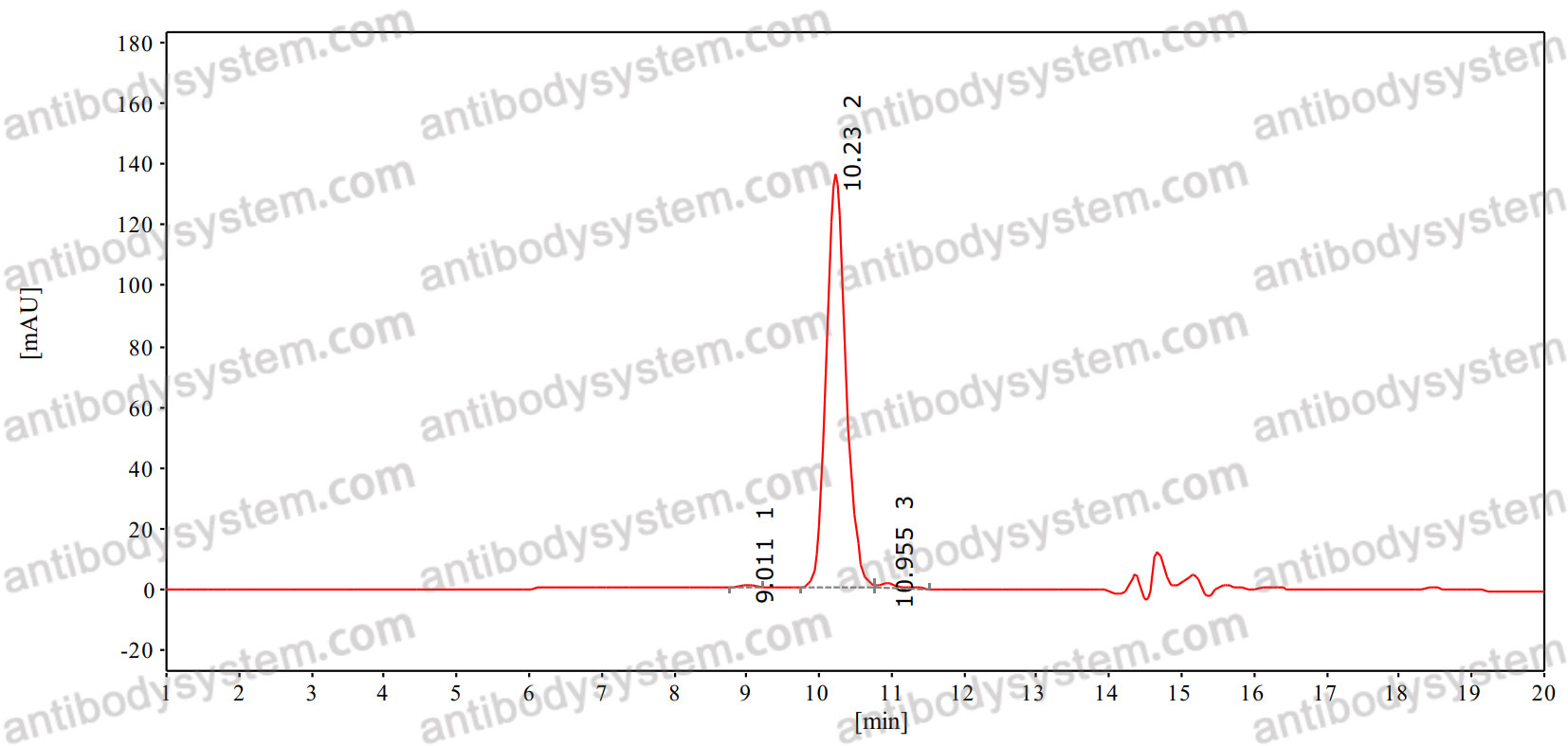
>95% as determined by SDS-PAGE.
Purification
Protein A/G purified from cell culture supernatant.
Accession
P16473
Form
Liquid
Storage buffer
PBS, pH 7.4 with 0.2M Arg
Stability and Storage
Use a manual defrost freezer and avoid repeated freeze-thaw cycles. Store at 4°C short term (1-2 weeks). Store at -20°C 12 months. Store at -80°C long term.
Clone ID
M22
Background
Anti-Human TSHR/LGR3 Antibody (M22, FHD18110) is a human monoclonal antibody targeting the Thyroid-Stimulating Hormone Receptor (TSHR/LGR3). TSHR (LGR3) is a vital G-protein coupled receptor predominantly expressed on thyroid follicular cells, which mediates TSH-stimulated signaling to control thyroid hormone synthesis, secretion and thyroid homeostasis. Abnormal expression and mutation of TSHR are closely correlated with various autoimmune thyroid diseases. This high-specificity TSHR/LGR3 antibody recognizes TSHR, and is primarily optimized for flow cytometry (FCM) analysis, enabling accurate detection of TSHR expression level and distribution on cell surface for thyroid biological research and disease mechanism study.
Note
For research use only.
Comparison of two different TSH-receptor antibody assays: A clinical practice study., PMID:38107298
Refractory Thyroid Eye Disease Unresponsive to Teprotumumab: A Case Report., PMID:38111423
Transition from Hashimoto thyroiditis to Graves's Disease: an unpredictable change?, PMID:38117453
The evaluation of retrobulbar fat tissue in Graves' orbitopathy with shear-wave ultrasound elastography., PMID:38321200
The full-length TSH receptor is stabilized by TSH ligand., PMID:38373379
Development and basic performance verification of a rapid homogeneous bioassay for agonistic antibodies against the thyroid-stimulating hormone receptor., PMID:38447802
A Novel TSHR Gene Mutation in a Family with Non-autoimmune Hyperthyroidism., PMID:38566871
A TSHR-Targeting Aptamer in Monocytes Correlating with Clinical Activity in TAO., PMID:38650837
A Novel Association Between Human Papillomavirus and Thyroid Eye Disease., PMID:38746201
Minor hyperthyroidism with normal levels of thyroid-stimulating hormone receptor antibodies: a case report., PMID:38813368
Immune checkpoints: new insights into the pathogenesis of thyroid eye disease., PMID:38817600
Gut microbiome in the Graves' disease: Comparison before and after anti-thyroid drug treatment., PMID:38820506
Graves disease: latest understanding of pathogenesis and treatment options., PMID:39039206
Identification and functionalization of thyrotropin receptor antibodies with different antigenic epitopes., PMID:39046281
TSHR-IGF-IR complex drives orbital fibroblast misbehavior in thyroid eye disease., PMID:39082947
TSH Receptor Oligomers Associated With the TSH Receptor Antibody Reactome., PMID:39116382
Zirconium- 89 Labeled Antibody K1-70 for PET Imaging of Thyroid-stimulating Hormone Receptor Expression in Thyroid Cancer., PMID:39174789
Impact of ibrutinib on inflammation in a mouse model of Graves' orbitopathy., PMID:39280007
Familial Nonautoimmune Hyperthyroidism Due to a TSH Receptor Gene Pathogenic Variant., PMID:39301178
STAT3 single-nucleotide variants in autoimmune thyroid disease in the Pakhtun population of Khyber Pakhtunkhwa, Pakistan., PMID:39385969
Hypothyroidism Induced by a TSH Receptor Peptide-Implications for Thyroid Autoimmunity., PMID:39435685
Proangiogenic effect of thyrotropin receptor stimulating antibody in human umbilical vein endothelial cells., PMID:39455509
The TSH Receptor Antibody Reactome Contributes to Retro-Orbital Inflammation., PMID:39502473
A novel bioassay for thyroid-blocking immunoglobulins., PMID:39534254
Comparison between thyroid stimulating immunoglobulin and TSH-receptor antibodies in the diagnosis and management of Graves' disease., PMID:39669491
Mutation spectra and genotype‑phenotype analysis of congenital hypothyroidism in a neonatal population., PMID:39720292
Linsitinib inhibits proliferation and induces apoptosis of both IGF-1R and TSH-R expressing cells., PMID:39723207
Effects of linsitinib on M22 and IGF:1-treated 3D spheroids of human orbital fibroblasts., PMID:39747159
Immunization with OPN5 increased seasonal degradation of reproductive activity in Magang ganders., PMID:39754930
Establishment of Time-Resolved Fluorescence Immunoassay for Thyrotropin Receptor Antibodies and Clinical Application., PMID:39776097
Mechanisms in Thyroid Eye Disease: The TSH Receptor Interacts Directly With the IGF-1 Receptor., PMID:39821041
The role of autophagy in Graves disease: knowns and unknowns., PMID:39834383
Thyroid-Targeted Nano-Bombs Empower HIFU for Graves' Disease., PMID:39840533
Development of animal models to study aggressive thyroid cancers., PMID:39874138
Controversies Surrounding IGF-I Receptor Involvement in Thyroid-Associated Ophthalmopathy., PMID:39909461
Thyroid dermopathy and thyroid eye disease associated with hypofunctional autoimmune thyroid disease with high TSI/anti-TSHR antibodies improved with teprotumumab., PMID:39950657
RBM10 loss promotes metastases by aberrant splicing of cytoskeletal and extracellular matrix mRNAs., PMID:39992626
Inflammatory and tolerogenic dendritic cells and T lymphocytes in Graves' thyroidal and orbital disease., PMID:40024060
Antibodies against the receptor for insulin-like growth factor 1 (IGF-1RAb), insulin-like growth factor 1 (IGF-1), and insulin-like growth factor binding protein 3 (IGFBP-3) in the serum of patients with Graves' and Basedow's disease with and without orbitopathy., PMID:40071798
Chimeric autoantibody receptor T cells specifically eliminate Graves' Disease autoreactive B cells., PMID:40264771
Bacteroides fragilis and propionate synergize with low-dose methimazole to treat Graves' disease., PMID:40265938
Human Papillomavirus and Thyroid Eye Disease., PMID:40272832
Thyroid-related orbitopathy: clinical overview, novel medical treatments and the role of orbital surgery., PMID:40317422
Follicular helper T cells in Graves' disease: pathogenic mechanisms and therapeutic implications., PMID:40322944
Thyroid eye disease (Graves' orbitopathy): clinical presentation, epidemiology, pathogenesis, and management., PMID:40324443
Molecular pathway and mechanism responsible for the progress of thyroid-associated orbitopathy., PMID:40381066
Marked Increase in Thyrotropin Receptor Antibodies With the Development of Pretibial Myxedema After Total Thyroidectomy., PMID:40384886
Preclinical ImmunoPET Imaging of Thyroid-Stimulating Hormone Receptor Expression in Thyroid Cancer using [64Cu]Cu-NOTA-TSHR-Ab., PMID:40403201
TSH Receptor Antibody Test Utilization Patterns from a National Reference Laboratory: TRAb, TSI, or Both?, PMID:40482060
Monoclonal Antibodies to Thyrotropin Receptor With Thyroid-Stimulating Activity Activate the NF-κB Pathway to Induce Chemokine Expression., PMID:40500868

 For research use only. Not for human or drug use.


