Catalog No.
RHD62801
Species reactivity
Human
Host species
Rabbit
Isotype
IgG
Clonality
Monoclonal
Applications
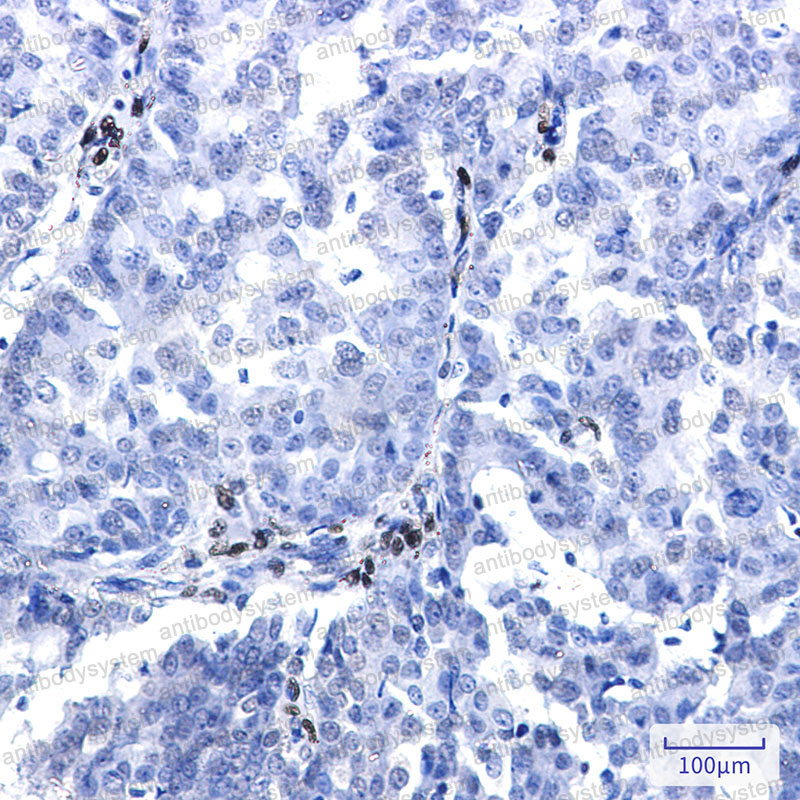
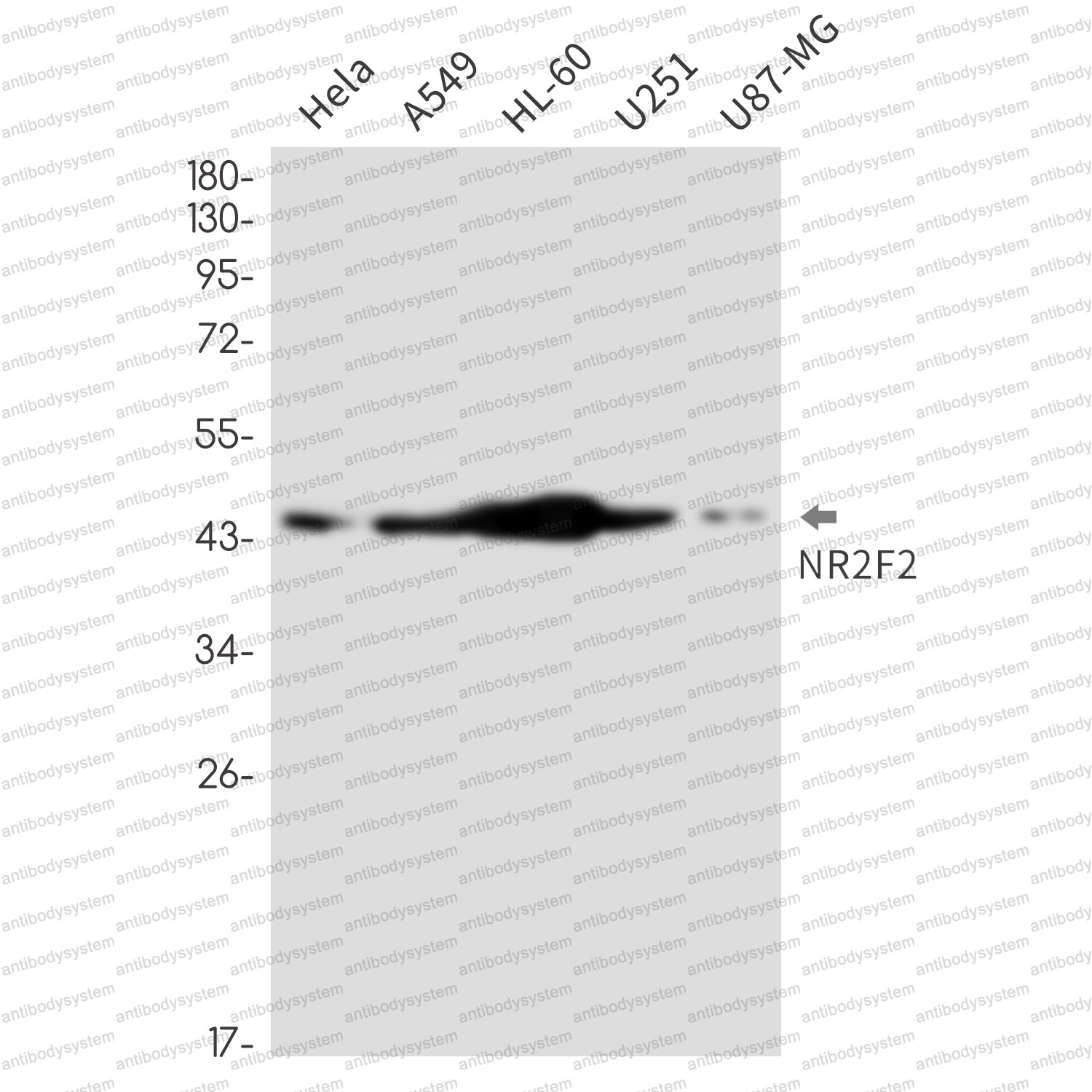
IHC, IP, WB
Recommended Dilution
| Application |
Dilution |
| IHC |
1:50-1:100, IP: 1:20, WB: 1:500-1:1000 |
Target
Nuclear receptor subfamily 2 group F member 2, TFCOUP2, Apolipoprotein A-I regulatory protein 1, COUP transcription factor II, ARP-1, COUP-TF2, ARP1, COUP-TF II, NR2F2, COUP transcription factor 2
Concentration
1 mg/ml
Endotoxin level
Please contact with the lab for this information.
Purity
>95% by SDS-PAGE.
Purification
Protein A/G purified from cell culture supernatant.
Accession
P24468
Form
Liquid
Storage buffer
0.01M PBS, pH 7.4, 0.05% BSA, 50% Glycerol, 0.05% Sodium azide.
Stability and Storage
Use a manual defrost freezer and avoid repeated freeze thaw cycles. Store at 4 ℃ for frequent use. Store at -20 ℃ for twelve months from the date of receipt.
Clone ID
R1S58
Note
For research use only.
Nuclear orphan receptor-binding retinoic acid response elements in keratinocytes., PMID:8074702
Transcriptional activation by the orphan nuclear receptor ARP-1., PMID:7784207
Orphan receptors chicken ovalbumin upstream promoter transcription factor II (COUP-TFII) and retinoid X receptor (RXR) activate and bind the rat cholesterol 7alpha-hydroxylase gene (CYP7A)., PMID:9092518
Functional domains of the human orphan receptor ARP-1/COUP-TFII involved in active repression and transrepression., PMID:9271371
Nuclear orphan receptors COUP-TFII and Ear-2: presence in oxytocin-producing uterine cells and functional interaction with the oxytocin gene promoter., PMID:9605516
Identification of COUP-TF as a transcriptional repressor of the c-mos proto-oncogene., PMID:10593989
ARP1 in Golgi organisation and attachment of manchette microtubules to the nucleus during mammalian spermatogenesis., PMID:10671377
A dynactin subunit with a highly conserved cysteine-rich motif interacts directly with Arp1., PMID:10671518
The retinoid X receptor response element in the human aldehyde dehydrogenase 2 promoter is antagonized by the chicken ovalbumin upstream promoter family of orphan receptors., PMID:10900149
Down-regulation of acyl-CoA oxidase gene expression in heart of troglitazone-treated mice through a mechanism involving chicken ovalbumin upstream promoter transcription factor II., PMID:12920214
Cloning, expression and regulation of chicken ovalbumin upstream promoter transcription factors (COUP-TFII and EAR-2) in the rat anterior pituitary gland., PMID:16721029
ICF, an immunodeficiency syndrome: DNA methyltransferase 3B involvement, chromosome anomalies, and gene dysregulation., PMID:18432406
COUP-TFI and -TFII nuclear receptors are expressed in amacrine cells and play roles in regulating the differentiation of retinal progenitor cells., PMID:19766631
Molecular characterization and functional analysis of a protease-related protein in Chang-liver cells., PMID:20510023
The nutritional induction of COUP-TFII gene expression in ventromedial hypothalamic neurons is mediated by the melanocortin pathway., PMID:20976162
Sonic hedgehog (Shh) regulates the expression of angiogenic growth factors in oxygen-glucose-deprived astrocytes by mediating the nuclear receptor NR2F2., PMID:23378030
Marker genes identify three somatic cell types in the fetal mouse ovary., PMID:25158167
Formation of vascular network structures within cardiac cell sheets from mouse embryonic stem cells., PMID:31245454
The expression of p-mTOR and COUP-TFII correlates with increased lymphangiogenesis and lymph node metastasis in prostate adenocarcinoma., PMID:29544697
The cell adhesion molecule Sdk1 shapes assembly of a retinal circuit that detects localized edges., PMID:34545809
microRNA-20b-5p overexpression combing Pembrolizumab potentiates cancer cells to radiation therapy via repressing programmed death-ligand 1., PMID:34968160
Salvianolic acid A attenuates inflammation-mediated atherosclerosis by suppressing GRP78 secretion of endothelial cells., PMID:36758912
Endothelial Cell Markers Are Inferior to Vascular Smooth Muscle Cells Markers in Staining Vasa Vasorum and Are Non-Specific for Distinct Endothelial Cell Lineages in Clinical Samples., PMID:36768296

 For research use only. Not for human or drug use.


