
AntibodySystem SELENOP Protein Supports Cell Research: Revealing a Macrophage-Mediated Mechanism of Ferroptosis Resistance in Pancreatic Cancer
A study published in Cell reveals how resident tissue macrophages support pancreatic cancer cells by transferring selenium transporter protein SELENOP, helping tumor cells resist ferroptosis and promoting tumor progression. AntibodySystem's Recombinant Mouse SELENOP Protein is featured in this research.
Research Background
Pancreatic ductal adenocarcinoma (PDAC) is characterized by a complex tumor microenvironment in which interactions between cancer cells and surrounding stromal and immune cells can influence tumor development and progression.
Ferroptosis, an iron-dependent form of regulated cell death driven by lipid peroxidation, has emerged as an important process in cancer biology. However, how cells within the tumor microenvironment influence the ferroptosis susceptibility of pancreatic cancer cells remains an important research question.
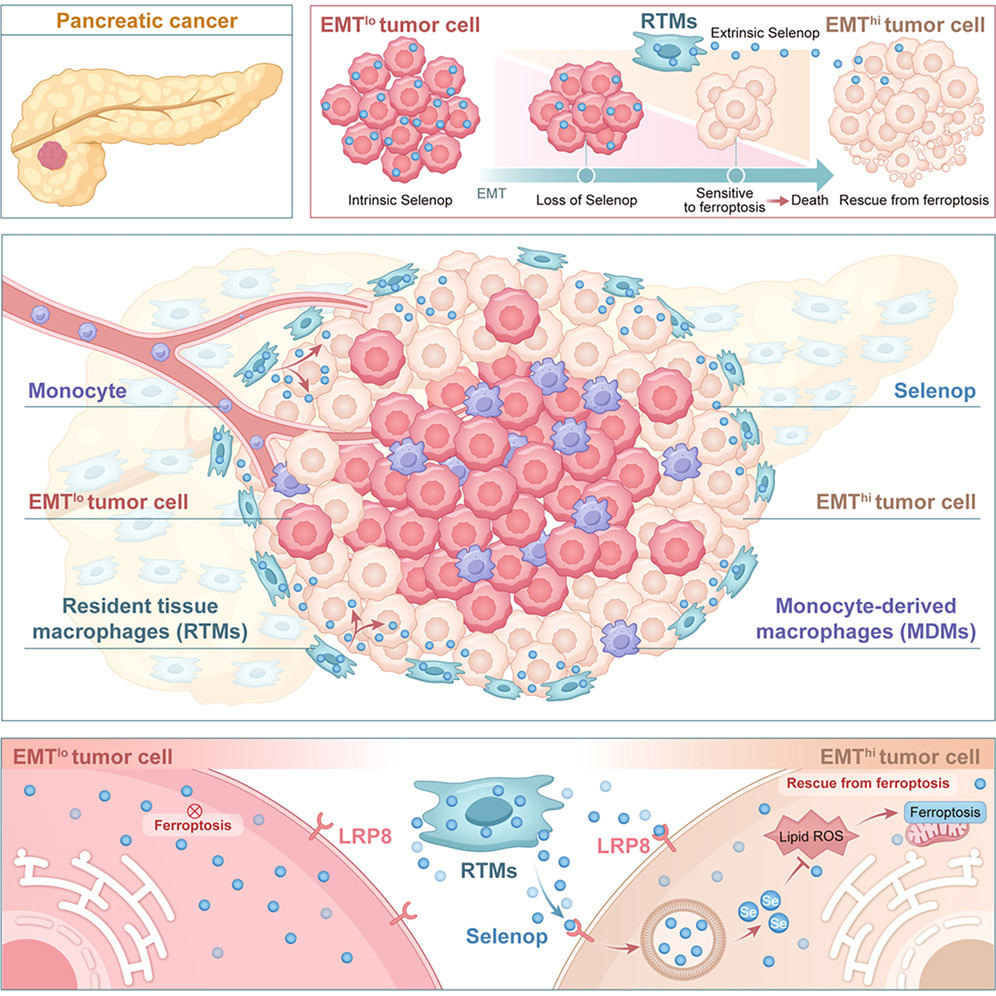
In this study, researchers identified a previously unrecognized role for resident tissue macrophages (RTMs): these macrophages transfer SELENOP to pancreatic cancer cells, providing selenium that supports cellular antioxidant defenses and protects tumor cells against ferroptosis.
Key Research Findings
Key Findings at a Glance
- Resident tissue macrophages serve as a source of SELENOP within the pancreatic tumor microenvironment.
- SELENOP transfer promotes selenium acquisition by pancreatic cancer cells through the receptor LRP8.
- Macrophage-derived SELENOP supports selenoprotein-dependent antioxidant defenses and limits ferroptosis.
- The SELENOP-LRP8 axis is associated with epithelial-mesenchymal transition (EMT), tumor progression, and metastasis.
- Experimental disruption of this pathway alters tumor progression and ferroptosis sensitivity.
1. Resident Tissue Macrophages Provide SELENOP to Pancreatic Cancer Cells
By integrating single-cell RNA sequencing, spatial transcriptomics, and lineage-tracing approaches, the researchers investigated cellular interactions within pancreatic tumors and identified resident tissue macrophages as an important source of SELENOP.
The findings indicate that macrophage-derived SELENOP can be transferred to neighboring pancreatic cancer cells, establishing a functional connection between the tumor microenvironment and tumor-cell selenium metabolism.
2. The SELENOP-LRP8 Pathway Supports Resistance to Ferroptosis
The study identified LRP8 as a receptor involved in SELENOP uptake by pancreatic cancer cells. Following uptake, SELENOP contributes to selenium availability and supports the activity of selenoprotein-based antioxidant systems.
These processes help limit lipid peroxidation and reduce ferroptotic cell death, particularly in mesenchymal-like pancreatic cancer cells. In experimental settings, recombinant SELENOP treatment was also used to investigate the relationship between SELENOP availability and ferroptosis sensitivity.
3. SELENOP Signaling Is Linked to Tumor Progression and Metastasis
Functional experiments, including disruption of Selenop in resident tissue macrophages and interference with Lrp8, demonstrated the contribution of this pathway to tumor-associated processes.
The study further connected macrophage-derived SELENOP signaling with epithelial-mesenchymal transition and pancreatic cancer progression. Analyses of human PDAC tissues provided additional evidence supporting the relevance of this macrophage-tumor cell interaction.
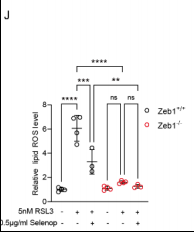
(J) Relative oxidized BODIPY 581/591 C11 levels in Zeb1+/+ and Zeb1-/- tumor cells untreated,treated with 5 nM RSL3 alone, or treated with 5 nM RSL3 + 0.5 μg/ml recombinant Selenopprotein . n = 3 – 4 per group .
Why This Study Matters
These findings expand the understanding of how the tumor microenvironment regulates cancer-cell survival. Rather than acting solely through direct cell-to-cell signaling, resident macrophages can influence tumor metabolism by supplying a functional protein that supports selenium-dependent antioxidant protection.
By connecting macrophage-derived SELENOP, LRP8-mediated uptake, selenium metabolism, and ferroptosis resistance, the study provides a framework for investigating the role of nutrient and protein transfer in pancreatic cancer biology.
The work also highlights the importance of studying interactions between immune cells and cancer cells when exploring mechanisms associated with tumor progression and therapeutic vulnerability.
Recombinant Mouse SELENOP Protein, N-His
SELENOP (Selenoprotein P) is a selenium transport protein involved in selenium distribution and cellular redox biology. As demonstrated in this Cell study, SELENOP is also relevant to research on macrophage-tumor cell communication and ferroptosis resistance in pancreatic cancer.
AntibodySystem provides research-grade Recombinant Mouse SELENOP Protein for studies investigating SELENOP-associated biological mechanisms and protein function.
Explore AntibodySystem ProductsThis product is intended for research use only and is not intended for diagnostic or therapeutic applications.
Conclusion
This study uncovers a macrophage-mediated mechanism through which SELENOP transfer supports selenium-dependent antioxidant defense and protects pancreatic cancer cells from ferroptosis. The findings establish a connection between the tumor microenvironment, selenium metabolism, and cancer progression, offering new perspectives for research into ferroptosis regulation and pancreatic cancer biology.
AntibodySystem is pleased to see its Recombinant Mouse SELENOP Protein (Cat. No. YME73101) featured in this research published in Cell.


