
2026 Lasker Awards: From Orexin to Parkinson's Disease
Often described as an indicator of potential Nobel Prize recognition, the Lasker Awards have announced the 2026 winners. This year's three major awards highlight advances in sleep-wake regulation, bispecific antibody therapy, and Parkinson's disease research advocacy. Together, they illustrate different paths from fundamental discoveries to clinical translation and sustained progress in disease research. Among these areas, two are particularly relevant to neuroscience research: orexin and orexin receptor 2 (OX2R), and the continued effort to understand and address Parkinson's disease (PD).

▲ 2026 Lasker Award Winners (Source: Lasker Foundation)
Orexin: A New Understanding of Sleep and Wakefulness
The 2026 Albert Lasker Basic Medical Research Award was presented to Emmanuel Mignot and Masashi Yanagisawa for their discovery of orexin and their work establishing the link between orexin deficiency and narcolepsy. In the 1990s, Yanagisawa and his colleagues identified orexin and its receptors through studies of orphan G protein-coupled receptors. Around the same time, Mignot's genetic studies of canine narcolepsy linked disease-associated mutations to orexin receptor 2 (OX2R). Subsequent research established an important role for orexin signaling in maintaining wakefulness. These discoveries shifted the study of sleep from traditional physiological observations toward molecular mechanisms and laid the foundation for therapeutic strategies targeting orexin receptors. Orexin receptor antagonists are now used in the treatment of insomnia, while strategies aimed at activating OX2R are also being explored for narcolepsy.
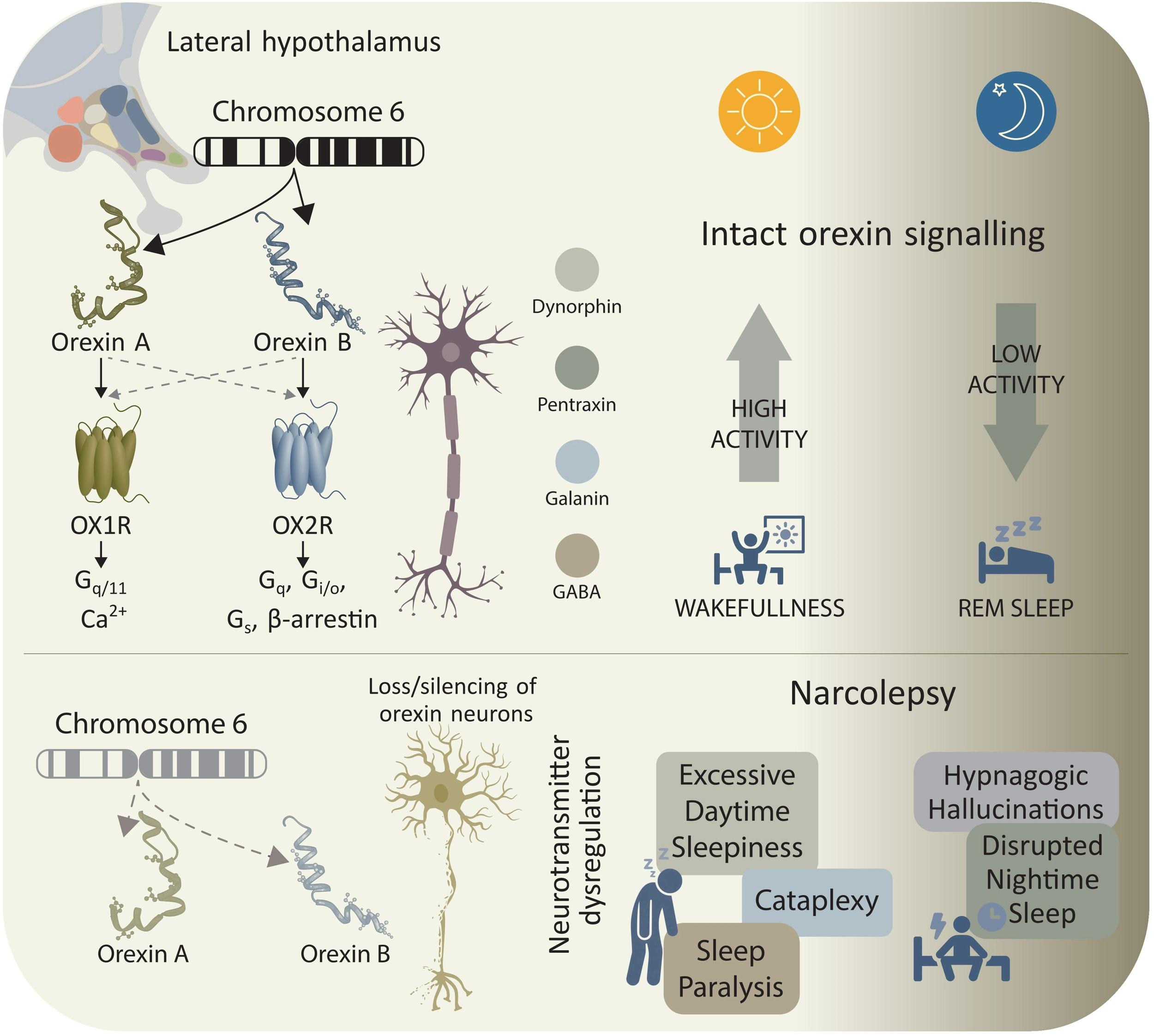
▲ Orexin neuron dysfunction and state instability in narcolepsy (DOI: 10.3389/fpsyt.2026.1799520)
AntibodySystem | OX2R Research Tools
Research on orexin receptors requires reliable tools for studying receptor expression, localization, and related molecular mechanisms. AntibodySystem provides antibodies and recombinant proteins associated with OX2R research to support studies in neuroscience and receptor biology.
| Catalog No. | Product Name |
|---|---|
| YMJ27901 | Recombinant Mouse CD200R1/OX2R Protein, N-His |
| EHJ27902 | Recombinant Human CD200R1/OX2R Protein, C-His |
| EHJ27901 | Recombinant Human CD200R1/OX2R Protein, C-His |
| EHJ27903 | Recombinant Human CD200R1/OX2R Protein, C-Fc |
| FHJ27910 | Anti-Human CD200R1/OX2R Antibody (OX-108) |
| FHJ27912 | Anti-Human CD200R1/OX2R Antibody (OX-108), PE |
| FHJ27914 | Anti-Human CD200R1/OX2R Antibody (OX-108) PerCP |
| FHJ27913 | Anti-Human CD200R1/OX2R Antibody (OX-108), APC |
| FHJ27911 | Anti-Human CD200R1/OX2R Antibody (OX-108) FITC |
| PMJ27901 | Anti-Mouse CD200R1/OX2R Polyclonal Antibody |
Bispecific Antibodies: Rethinking the Coagulation Pathway
The 2026 Lasker-DeBakey Clinical Medical Research Award was presented to Takehisa Kitazawa, Kunihiro Hattori, and Tomoyuki Igawa for the development of a bispecific antibody for the treatment of hemophilia A. The approach uses a bispecific antibody to simultaneously bind activated coagulation factor IX (FIXa) and coagulation factor X (FX), mimicking part of the function normally provided by factor VIII and thereby restoring coagulation activity in patients with hemophilia A. Beyond its clinical impact, this work represents an important example of how antibody engineering can move beyond conventional single-target binding. By redesigning how an antibody interacts with its targets, researchers can create molecules capable of reconstructing or modulating biological functions.
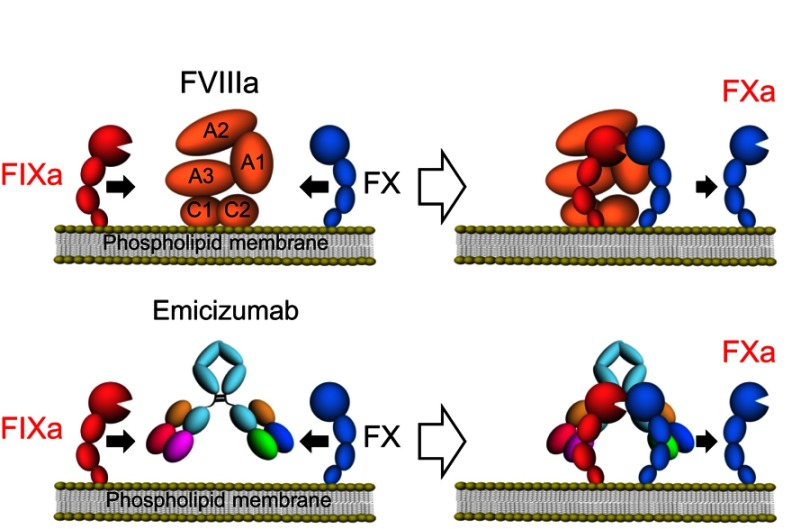
▲ Mode of action of FVIIIa or of a bispecific antibody, emicizumab (PMCID: PMC6613000)
From Public Advocacy to Parkinson's Disease Research
The 2026 Lasker-Bloomberg Public Service Award was presented to Michael J. Fox for his long-standing efforts to raise awareness of Parkinson's disease and accelerate research toward better treatments and, ultimately, a cure. After publicly sharing his experience with Parkinson's disease, Fox established the Michael J. Fox Foundation for Parkinson's Research in 2000. The foundation has supported basic and clinical research, therapeutic development, and greater patient involvement in Parkinson's disease research. According to the Lasker Foundation, these efforts have helped strengthen collaboration among researchers, clinicians, industry, and patients. From a research perspective, Parkinson's disease involves multiple biological processes, including dysfunction of dopaminergic neurons, abnormal protein accumulation, and neuroinflammation. Disease-associated proteins such as α-synuclein remain important subjects of investigation, with studies focusing on their expression, modification, aggregation, and relationship to disease mechanisms.
AntibodySystem | Neuroscience Research Tools
AntibodySystem offers a range of research products for neuroscience and neurodegenerative disease studies, providing tools for the detection and characterization of disease-associated proteins.
| Catalog No. | Product Name |
|---|---|
| YHD45401 | Recombinant Human MAOA Protein, N-His |
| YHD73301 | Recombinant Human Monoamine Oxidase B/MAOB/AOFB protein, N-His |
| YMJ02201 | Recombinant Mouse LRRK2 Protein, C-His |
| YHJ02201 | Recombinant Human LRRK2 Protein, N-His |
| YHD72601 | Recombinant Human CNTFR Protein, N-His |
| YHD41201 | Recombinant Human DDC Protein, N-His |
| EHH55901 | Recombinant Human GFRAL Protein, C-Fc |
| AHH55901 | Recombinant Human GFRAL Protein, C-His (Active) |
| FHE22010 | Anti-Human SNCA/Alpha-synuclein Antibody (D10) |
| PHE22001 | Anti-SNCA Polyclonal Antibody |
| RHE22001 | Anti-Human SNCA/Alpha-synuclein Nanobody (SAA1198) |
| VHE22003 | InVivoMAb Anti-Human SNCA Antibody (Iv0174) |
| VHE22004 | InVivoMAb Anti-Human SNCA Antibody (Iv0175) |
| VHE22005 | InVivoMAb Anti-Human SNCA Antibody (9E4#) |
| DHE22001 | Research Grade Cinpanemab |
| DHE22002 | Research Grade Prasinezumab |
| DHE22003 | Research Grade Anti-Human SNCA (MEDI1341) |
| DHD72601 | Research Grade Anti-Human CNTFR (REGN8938) |
| RHD41201 | Anti-DDC Antibody (R1R63) |
| FHH55912 | Anti-Human GFRAL Antibody (25M22), PE |
| FHH55910 | Anti-Human GFRAL Antibody (25M22) |
| PHD45401 | Anti-Human MAOA Polyclonal Antibody |
| RHD45402 | Anti-MAOA Antibody (R1R74) |
| RHD45401 | Anti-MAOA Antibody (R1R75) |
| RHD73301 | Anti-MAOB Antibody (R1T24) |
| RHJ02201 | Anti-LRRK2/Dardarin Antibody (1D8) |
| RHJ02202 | Anti-LRRK2/Dardarin Antibody (8G10) |
| RHJ02203 | Anti-LRRK2/Dardarin Antibody (N138/6) |
| RHJ02206 | Anti-LRRK2 Antibody (R3U92) |
References
1. Narcolepsy as an immune-associated hypothalamic encephalopathy: orexin dysfunction and implications for precision sleep medicine.
2. Spotlight on emicizumab in the management of hemophilia A: patient selection and special considerations.


