
2026 New Zealand Influenza Outbreak: Influenza A Dominates, with RSV and Rhinovirus Activity Also Increasing
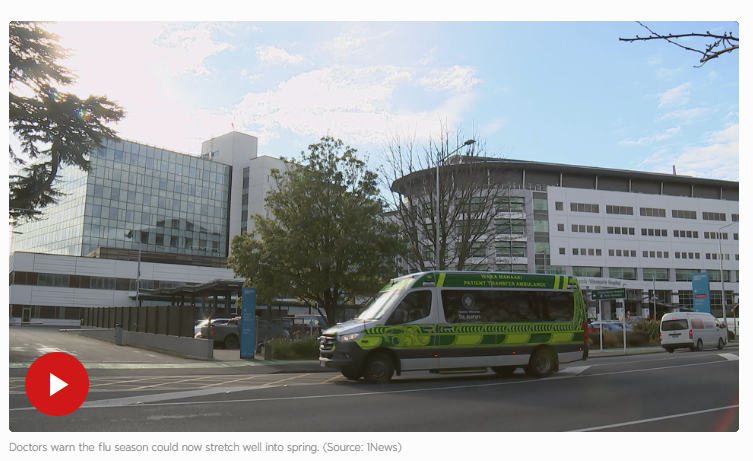
In 2026, New Zealand experienced a notable late-season increase in influenza activity. The current outbreak is mainly driven by Influenza A virus, with A(H3N2) identified as a major focus of surveillance and research. At the same time, Respiratory syncytial virus (RSV) and rhinovirus (RV) activity also remained elevated, contributing to an increased burden of respiratory infections.
This trend highlights the importance of comprehensive respiratory virus surveillance, especially when multiple respiratory pathogens circulate during the same season.
Why Is Influenza A the Major Driver of the Current Outbreak?
Influenza A virus is an enveloped, negative-sense single-stranded RNA virus belonging to the Orthomyxoviridae family. Its genome consists of eight segmented RNA molecules, encoding 10 viral proteins: Polymerase Basic protein 2 (PB2), Polymerase Basic protein 1 (PB1), Polymerase Acidic protein (PA), Hemagglutinin (HA), Nucleoprotein (NP), Neuraminidase (NA), Matrix (M) protein, and the Nonstructural proteins NS1 and NS2.
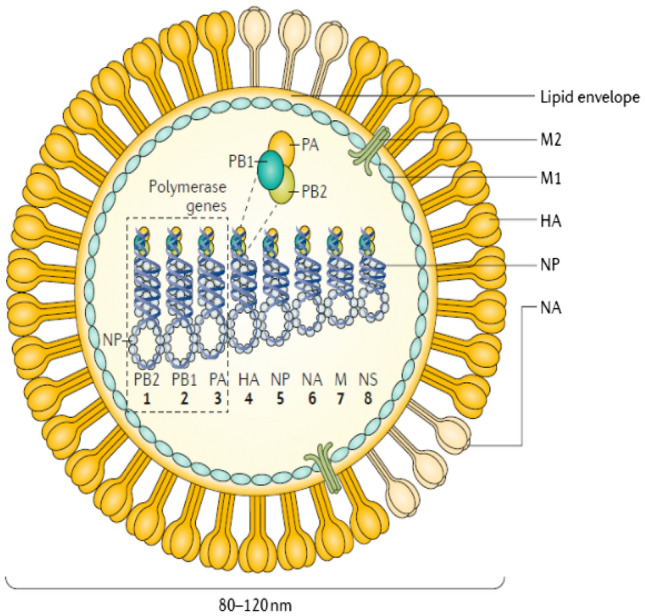
Table 1. Influenza Virus Protein Functions
| Protein | Function |
|---|---|
| HA | Envelope glycoprotein responsible for recognizing sialic acid receptors on host cell surfaces and mediating fusion of the viral envelope with the cell membrane. |
| NA | Envelope enzyme that cleaves sialic acid from host cell surfaces, aiding the release of newly formed virus particles and preventing aggregation. |
| M2 | Small transmembrane ion channel involved in the acidification process post-uncoating, crucial for viral replication; also a target for antiviral drugs (e.g., Adamantanes). |
| NP | Encapsulates viral RNA, forming ribonucleoprotein complexes, and participates in viral genome replication and transcription. |
| PB2, PB1, PA | Form the RNA-dependent RNA polymerase complex responsible for viral RNA replication and transcription. Mutations such as 627K/D701N in PB2 are closely associated with mammalian adaptation. |
| NS1 | Inhibits the host interferon response, aiding viral evasion of immune surveillance. |
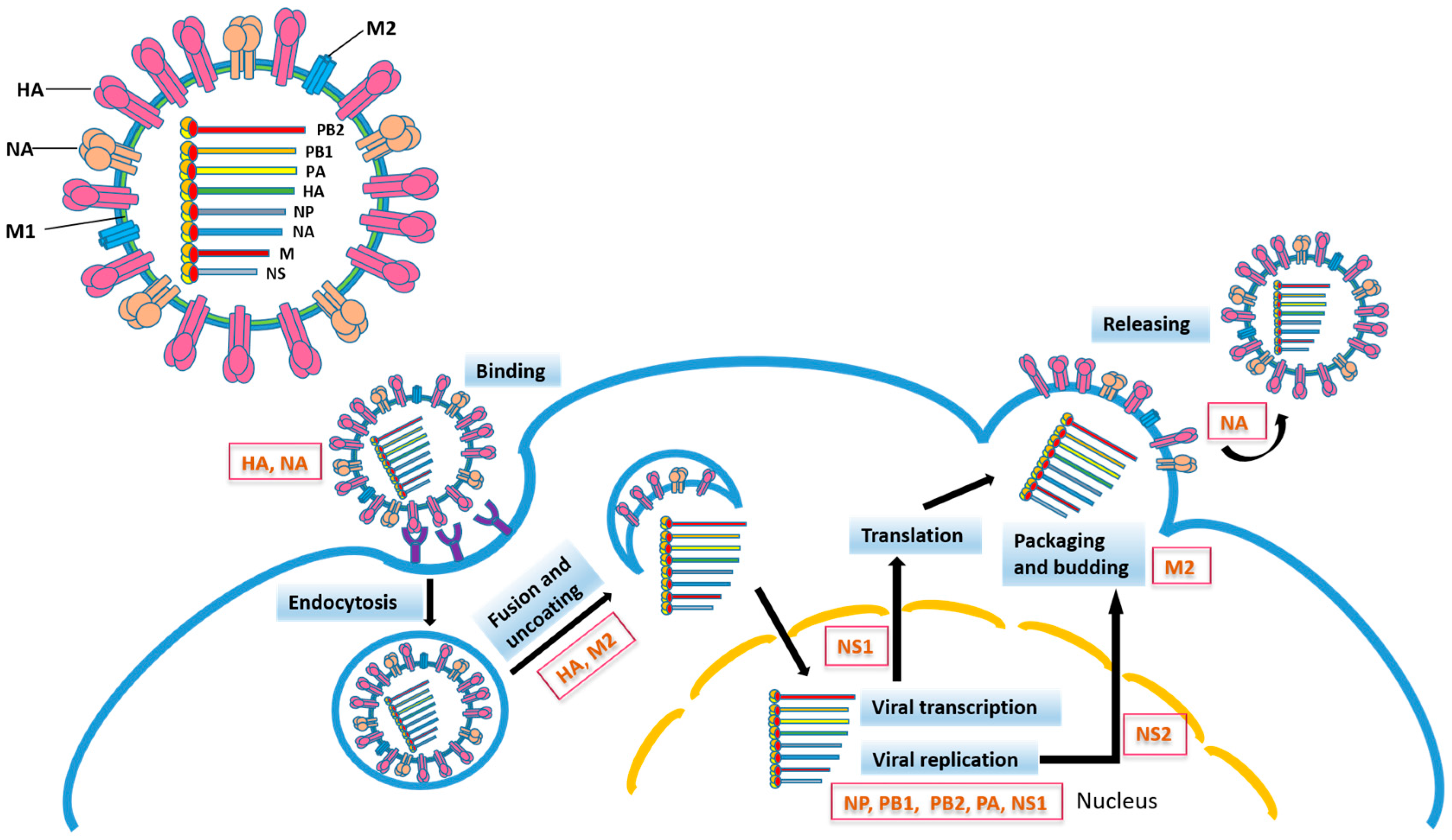
During infection, HA mediates viral attachment by binding to sialic acid receptors on respiratory epithelial cells, allowing viral entry into host cells. After entry, viral RNA replication and protein synthesis occur using host cellular machinery. NA facilitates the release of newly formed virions from infected cells, promoting viral spread.
The interaction between viral replication and host immune responses contributes to respiratory epithelial damage and influenza-associated symptoms.
HA and NA: Key Targets for Influenza Research
HA and NA are critical targets in influenza immunology and antiviral research. Antibodies targeting HA can block viral attachment and entry by recognizing specific antigenic epitopes, while NA-specific antibodies may interfere with viral release and reduce viral propagation. Therefore, HA, NA, and their antigenic regions are widely studied in:
- Influenza vaccine development
- Antibody discovery
- Viral antigen characterization
- Serological analysis
- Host-virus interaction studies
A major challenge in Influenza A research is its continuous genetic and antigenic evolution. Mutations in viral proteins, particularly HA and NA, can lead to antigenic drift, which may affect antibody recognition and vaccine effectiveness.
In addition, the segmented genome of Influenza A enables genetic reassortment between different viral strains. This process, known as antigenic shift, can generate viruses with new antigenic combinations and contributes to the pandemic potential of Influenza A.
Therefore, influenza surveillance requires not only epidemiological monitoring but also viral sequencing, antigenic characterization, and immunological analysis.
Influenza Prevention and Research Applications
Influenza vaccination remains the primary strategy for preventing seasonal influenza and reducing severe disease risk. Due to continuous viral evolution, vaccine strains require regular evaluation based on circulating influenza variants.
Antiviral drugs, including neuraminidase inhibitors, target key steps of the viral replication cycle to reduce viral spread. From a research perspective, understanding influenza viral proteins, antigenic variation, and antibody recognition mechanisms is essential for vaccine development, antiviral discovery, and respiratory virus surveillance.
Why Are RSV and Rhinovirus Also Important?
Although Influenza A is the major contributor to the current outbreak, other respiratory viruses, including respiratory syncytial virus (RSV) and rhinovirus, also require attention.
RSV fusion protein (F protein) and attachment protein (G protein) are major targets in RSV infection studies and vaccine research. Rhinoviruses, as common respiratory pathogens, are also important targets in respiratory virus detection and host immune response studies.
For researchers, the key challenge is not only identifying individual pathogens but also developing reliable approaches for multi-virus detection, antigen characterization, and immune response analysis.
Respiratory Virus Surveillance Requires Multi-Target Research Approaches
The 2026 New Zealand influenza season demonstrates that respiratory disease outbreaks are often driven by multiple viral pathogens rather than a single virus. Comprehensive respiratory virus research requires integrated approaches, including pathogen identification, viral antigen detection, genomic analysis, antigen characterization, and host immune profiling. For Influenza A, continuous monitoring of HA and NA antigenic changes remains critical for understanding viral evolution and immune recognition.
AntibodySystem Respiratory Virus Research Tools
AntibodySystem provides high-quality antibodies, recombinant proteins, and ELISA-related research tools to support respiratory virus studies, including Influenza A, RSV, rhinovirus, and other viral pathogens.
Viral antigen-specific antibodies and recombinant proteins can be applied in viral antigen detection, protein characterization, WB, IF, IHC, ELISA, immunological analysis, and host-virus interaction studies. These research tools support investigations into viral mechanisms, antigenicity, immune responses, and vaccine-related research.
Influenza A Virus Research Products
| Catalog No. | Product Name |
|---|---|
| YVV23412 | Recombinant Influenza A virus (H3N2) M2e Protein, N-His |
| YVV03302 | Recombinant Influenza A virus (H3N2) NP/Nucleoprotein Protein, N-GST & C-His |
| EVV24002 | Recombinant Influenza A virus (H3N2) NA/Neuraminidase Protein, N-His |
| EVV03834 | Recombinant Influenza A virus (H3N2) HA/Hemagglutinin Protein, C-6His |
| YVV50503 | Recombinant Influenza A virus (H3N2) NS1/NS1A Protein, C-His |
| VVV03805 | InVivoMAb Anti-Influenza A virus HA/Hemagglutinin Antibody |
| VVV24006 | InVivoMAb Anti-Influenza A/B virus NA/Neuraminidase Broad-Neutralizing Antibody |
| DVV03807 | Research Grade Anti-Influenza A virus HA Broad-Neutralizing Antibody (CR9114) |
| DVV03809 | Research Grade Anti-Influenza A virus (H3N2) HA Broadly Neutralizing Antibody (CR8020) |
RSV Research Products
| Catalog No. | Product Name |
|---|---|
| EVV02801 | Recombinant HRSV-A2 Pre-F/Fusion glycoprotein F0 Protein, C-His-Strep |
| EVV02805 | Recombinant HRSV PreF3 Protein, C-6His-Strep |
| EVV02804 | Recombinant HRSV F/Fusion glycoprotein F0 Protein, C-His |
| VVV02811 | InVivoMAb Anti-HRSV/hMPV Fusion glycoprotein Neutralizing Antibody (M1C7) |
| VVV08501 | InVivoMAb Anti-HRSV G/Major surface glycoprotein G Antibody (CB002.5) |
| RVV02817 | Anti-RSV F/Fusion glycoprotein F0 Antibody (4D7) |
| RVV02825 | Anti-RSV F/Fusion glycoprotein F0 (SAA2058) |
| RVV02816 | Anti-HRSV-A F/Fusion glycoprotein F0 Antibody (101F) |
| PVV46101 | Anti-HRSV M/Matrix protein Polyclonal Antibody |
| RVV02824 | Anti-HRSV F/Fusion glycoprotein F0 Nanobody (SAA1194) |
| DVV02817 | Research Grade Anti-RSV F/Fusion glycoprotein F0 (RSV7.10) |
| DVV08402 | Research Grade Anti-HRSV-A F/Fusion glycoprotein F0 Antibody (15B3) |
Rhinovirus Research Products
| Catalog No. | Product Name |
|---|---|
| RVV07701 | Anti-HRV-14 Capsid protein VP1 Antibody (SAA2228) |
| RVV07702 | Anti-HRV-14 Capsid protein VP1 Antibody (SAA2229) |
| RVV07703 | Anti-HRV-14 Capsid protein VP3 Antibody (SAA2230) |
References
1. Naturally Occurring Terpenes: A Promising Class of Organic Molecules to Address Influenza Pandemics
2. Molecular Evolution of the H5 and H7 Highly Pathogenic Avian Influenza Virus Haemagglutinin Cleavage Site Motif
3. From Variation of Influenza Viral Proteins to Vaccine Development.
4. Host Protective Immune Responses against Influenza A Virus Infection.


