
ODC1-Mediated Polyamine Metabolism Drives EBV-Associated Cisplatin Resistance in Nasopharyngeal Carcinoma
| Category | Details |
|---|---|
| Key Finding | EBV activates ODC1 through BZLF1, enhancing polyamine biosynthesis. The ODC1–spermidine pathway promotes EBV replication and contributes to cisplatin resistance in NPC. |
| Clinical Relevance | High ODC1 expression predicts poor prognosis in NPC patients (HR=2.316, P=0.047). ODC1 inhibition by DFMO restores cisplatin sensitivity in vitro and in vivo. |
| Molecular Mechanism | Spermidine promotes eIF5A hypusination and supports EBV replication-associated protein translation, while reducing cGAS-mediated antiviral signaling. |
| Research Tool | Anti-Hypusine Antibody (RGK08101) supports detection of eIF5A hypusine modification in polyamine metabolism studies. |
Nasopharyngeal carcinoma (NPC) is an EBV-associated epithelial malignancy with nearly universal EBV positivity and a high incidence in Southern China. Cisplatin-based chemotherapy remains a standard treatment for advanced NPC; however, acquired drug resistance remains a major challenge.
Polyamine metabolism plays essential roles in cancer progression, with ornithine decarboxylase 1 (ODC1), the rate-limiting enzyme in polyamine biosynthesis, frequently dysregulated in tumors. However, how EBV infection regulates ODC1-driven metabolic reprogramming and contributes to cisplatin resistance in NPC has remained unclear.
In 2026, published a study in Advanced Science entitled "EBV-Driven ODC1 Upregulation Enhances Polyamine Anabolism to Promote Viral Replication and Cisplatin Resistance in Nasopharyngeal Carcinoma." The study revealed a previously unrecognized connection between EBV infection, polyamine metabolism, and cisplatin resistance in NPC.
Study Design: The researchers established EBV-positive NPC cell models (HONE1-EBV) and EBV-negative control cell models (HONE1 and CNE2). By integrating metabolomics, ¹³C-arginine metabolic flux analysis, ChIP-qPCR, xenograft mouse models, and tissue microarray analysis of 126 NPC patient samples, the study systematically investigated how EBV regulates polyamine metabolism and contributes to malignant progression.
EBV Activates ODC1 to Reprogram Polyamine Metabolism in NPC
- EBV directly promotes ODC1 transcription through its immediate-early protein BZLF1, which binds to the ODC1 promoter region.
- ODC1 mRNA and protein levels are significantly elevated in EBV-positive NPC cells compared with EBV-negative controls.
- Metabolic profiling and ¹³C-arginine tracing revealed increased spermidine and spermine production in EBV-positive cells.
- ODC1 depletion or DFMO treatment reduced EBV DNA copy numbers by approximately 50–70%, which was reversed by spermidine supplementation.
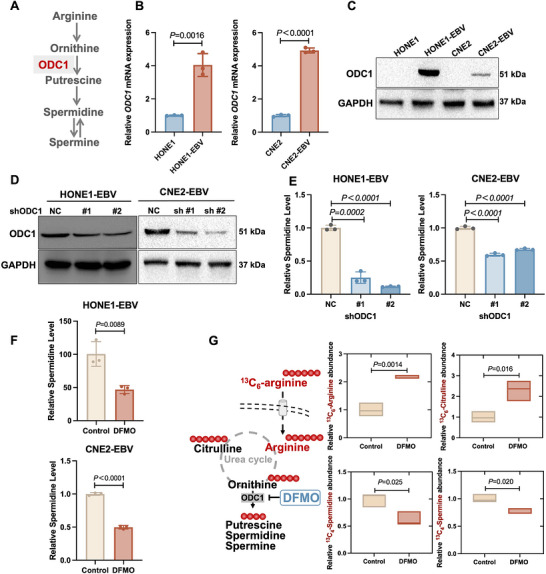
▲ High ODC1 expression enhances polyamine biosynthesis in EBV‐positive NPC cells
The ODC1–Spermidine Axis Promotes EBV Replication Through eIF5A Hypusination
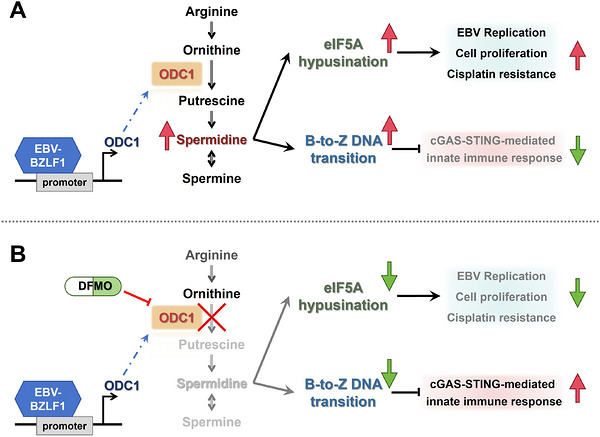
A major finding of this study is the identification of polyamine metabolism as a regulator of EBV replication. Spermidine serves as the substrate for eIF5A hypusination, a unique post-translational modification required for efficient translation of proteins containing polyproline motifs.
Through enhanced eIF5A hypusination, the ODC1–spermidine pathway promotes translation of the EBV EAD protein, an essential replication-associated factor required for viral DNA replication. Inhibition of eIF5A hypusination using GC7 suppressed EBV DNA replication, while spermidine supplementation rescued this effect.
Accurate detection of eIF5A hypusine modification is essential for validating this molecular mechanism. In this study, eIF5A hypusination was analyzed using AntibodySystem Anti-Hypusine Antibody (RGK08101).
ODC1-Driven Polyamine Metabolism Facilitates Viral Immune Evasion
Beyond supporting viral replication, the ODC1–spermidine pathway also contributes to EBV-mediated immune escape. Spermidine induces a conformational transition of EBV genomic DNA from B-form to Z-form DNA, reducing recognition by cGAS and decreasing IFN-β production.
Thus, EBV exploits host polyamine metabolism to simultaneously enhance viral replication and weaken antiviral immune surveillance.
▲ The ODC1‐spermidine pathway contributes to EBV DNA replication and immune evasion
ODC1 Promotes Cisplatin Resistance in EBV-Positive NPC
ODC1 depletion or DFMO treatment significantly inhibited EBV-positive NPC cell proliferation and increased sensitivity to cisplatin. In xenograft mouse models, combination treatment with DFMO and cisplatin produced stronger tumor growth inhibition compared with either treatment alone, reducing tumor spermidine levels and EBV DNA copy numbers while restoring IFN-β production, without obvious liver or kidney toxicity.
Clinical Significance of ODC1 in Nasopharyngeal Carcinoma
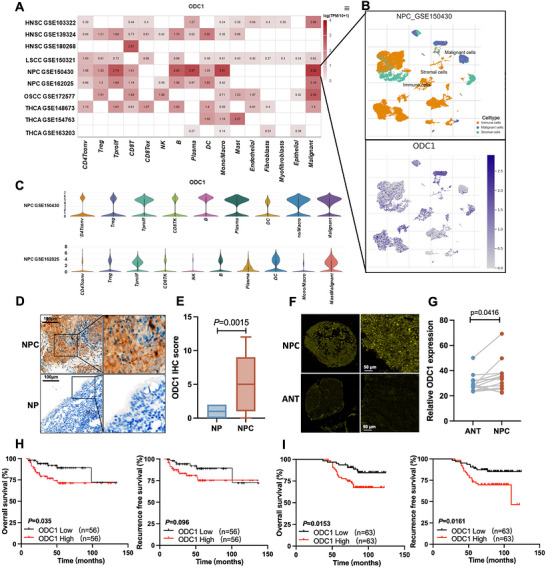
Analysis of 126 NPC patient tissue samples revealed that high ODC1 expression was significantly associated with tumor metastasis, disease recurrence, high Ki-67 expression (≥40%), advanced T stage (T3/T4), and lymph node metastasis. Multivariate analysis identified ODC1 expression as an independent prognostic factor (HR=2.316, P=0.047).
Conclusion
This study reveals a previously unrecognized role of the EBV–ODC1–polyamine axis in regulating viral replication, immune evasion, and chemotherapy resistance in nasopharyngeal carcinoma. By linking viral infection with host metabolic reprogramming, the findings provide new insights into EBV-associated tumor biology and highlight ODC1-mediated polyamine metabolism as a potential target for future intervention strategies.
Although these findings are promising, further validation in immunocompetent models will be required to fully understand the contribution of immune-mediated mechanisms.
AntibodySystem Related Research Products
Investigating virus–host interactions and metabolic regulation requires reliable tools for detecting key molecular modifications. AntibodySystem provides high-quality antibodies for studying eIF5A hypusination and related biological processes.


