
Eli Lilly's Tirzepatide Posts $27.7 Billion in First-Half 2026 Sales: How Dual GIPR/GLP-1R Agonism Outperforms Selective GLP-1R Agonism
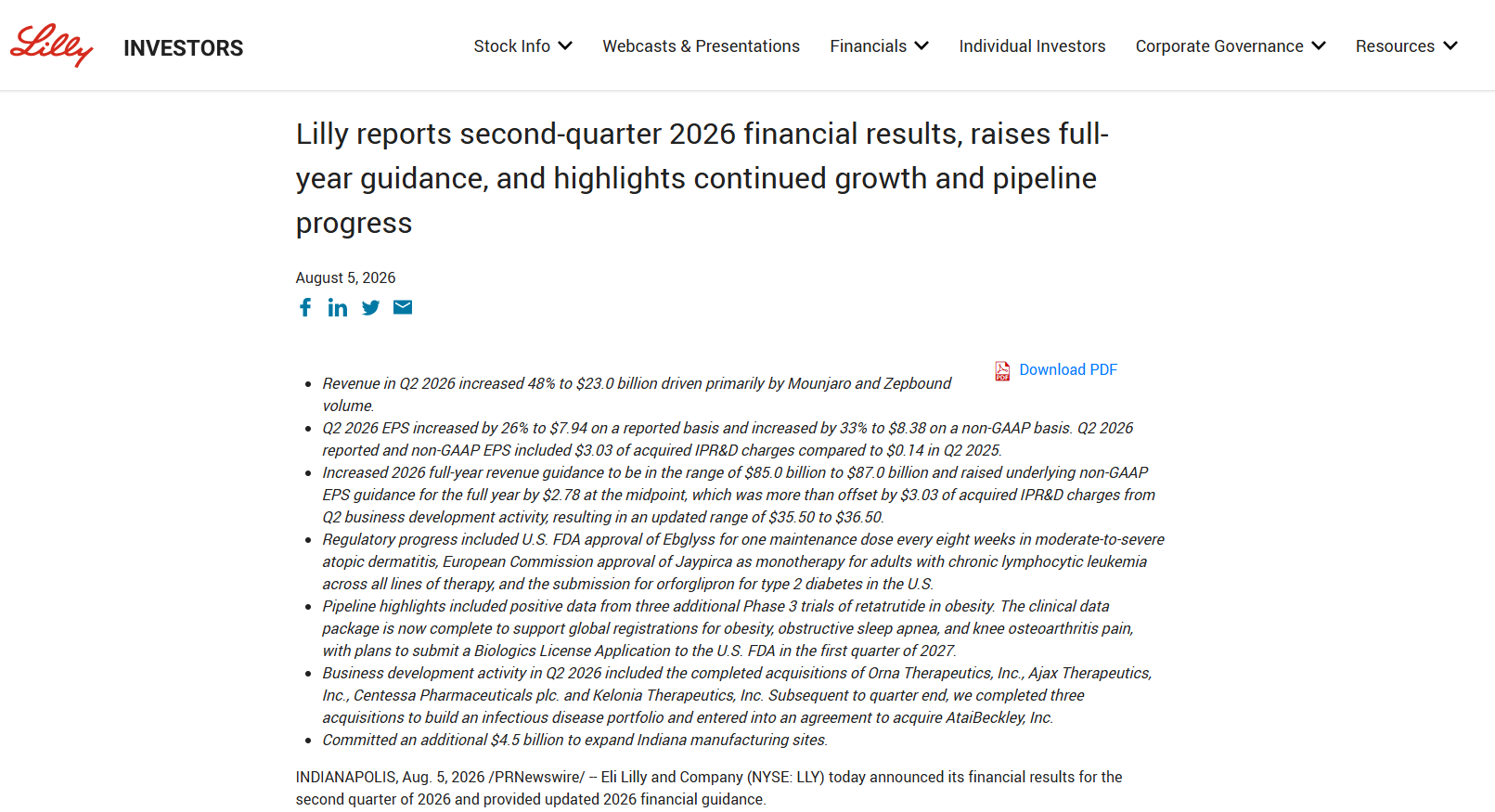
Eli Lilly reported first-half 2026 revenues of $42.8 billion, a 49% increase year-over-year. Its flagship product, tirzepatide (Mounjaro/Zepbound), generated $27.7 billion in the first half—an 88% year-over-year increase—representing nearly 65% of total revenue.
During the same period, Novo Nordisk's semaglutide franchise generated approximately $17.3 billion in combined sales — a gap of approximately $10 billion relative to tirzepatide. While semaglutide's sales remain substantial, the limits of its weight-loss efficacy and its gastrointestinal tolerability profile are well documented. The rapid adoption of tirzepatide reflects a clear clinical preference for more efficacious and better-tolerated agents for type 2 diabetes and obesity.
The fundamental distinction between these two agents lies in their receptor pharmacology: semaglutide is a selective GLP-1 receptor agonist, whereas tirzepatide is the first approved dual GIPR/GLP-1R agonist.
Why does dual receptor targeting outperform selective GLP-1 agonism? This question lies at the heart of molecular pharmacology. Tirzepatide's clinical superiority can be traced to two mechanistic features: "imbalanced" receptor engagement and "biased" signal transduction.
I. Semaglutide: A Selective GLP-1 Receptor Agonist
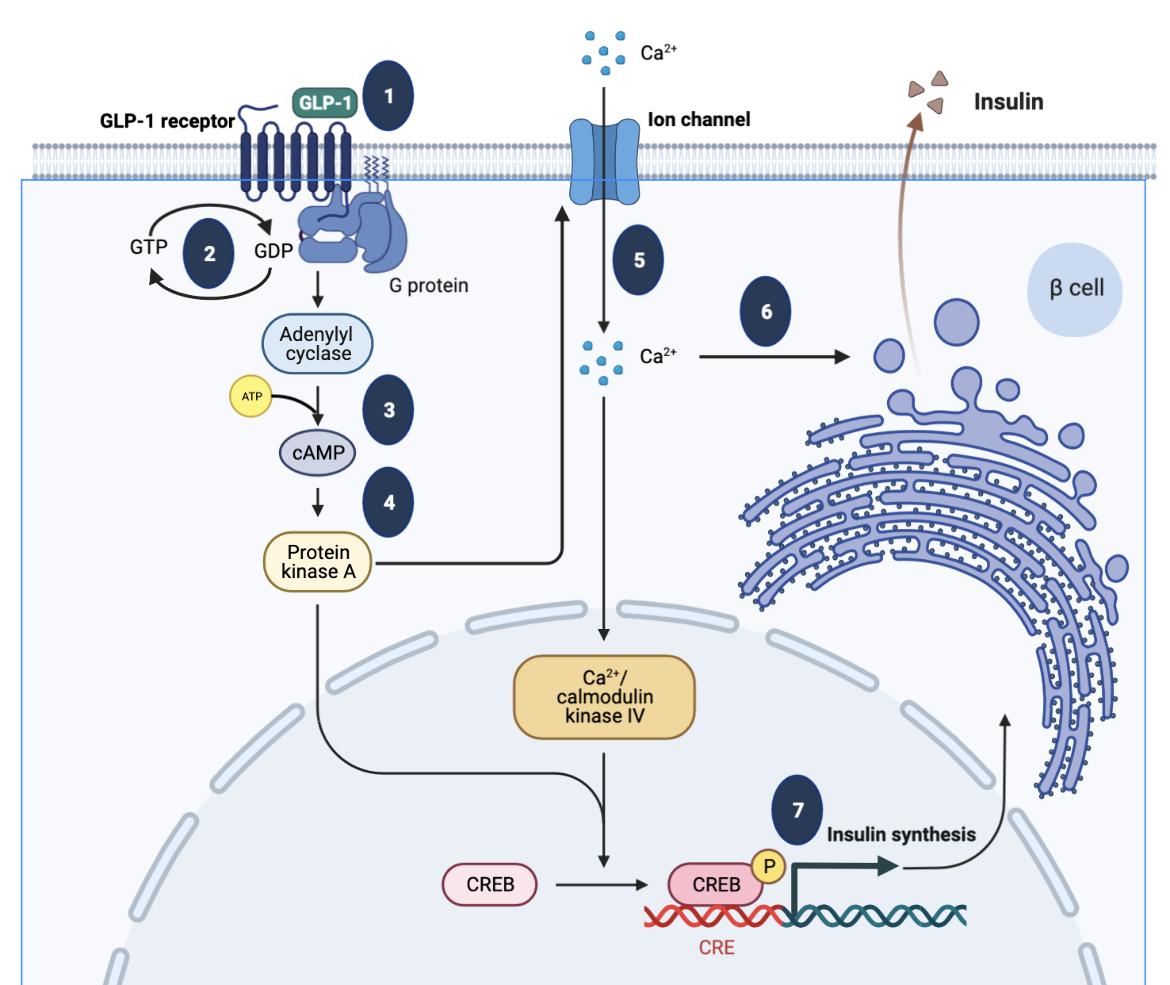
Semaglutide is a selective GLP-1 receptor (GLP-1R) agonist. Activation of GLP-1R enhances glucose-dependent insulin secretion, suppresses glucagon secretion, delays gastric emptying, and reduces appetite via central nervous system pathways.
Its primary limitation is the robust recruitment of β-arrestin, which drives GLP-1R internalization and desensitization, thereby attenuating glucose-stimulated insulin secretion. Moreover, selective GLP-1R agonism does not activate GIP receptors, which are abundantly expressed in adipose tissue and mediate distinct effects on energy metabolism—a pathway not engaged by semaglutide.
II. Tirzepatide: The Molecular Basis of Dual-Target Design
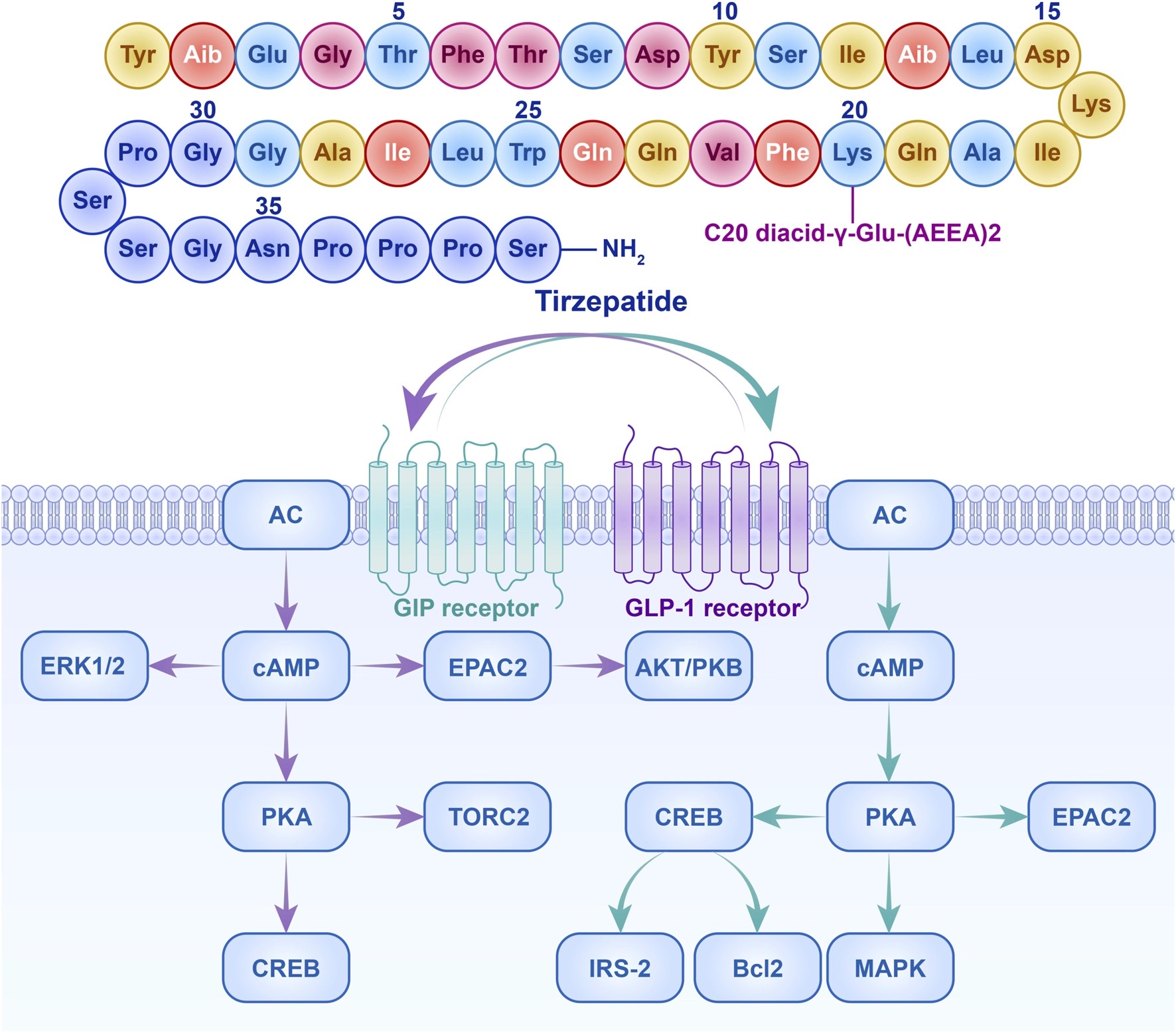
Tirzepatide (LY3298176) is a dual agonist at both the GIP receptor (GIPR) and the GLP-1 receptor (GLP-1R). Its clinical advantages derive from two distinct pharmacological properties.
(1) "Imbalanced" Receptor Engagement
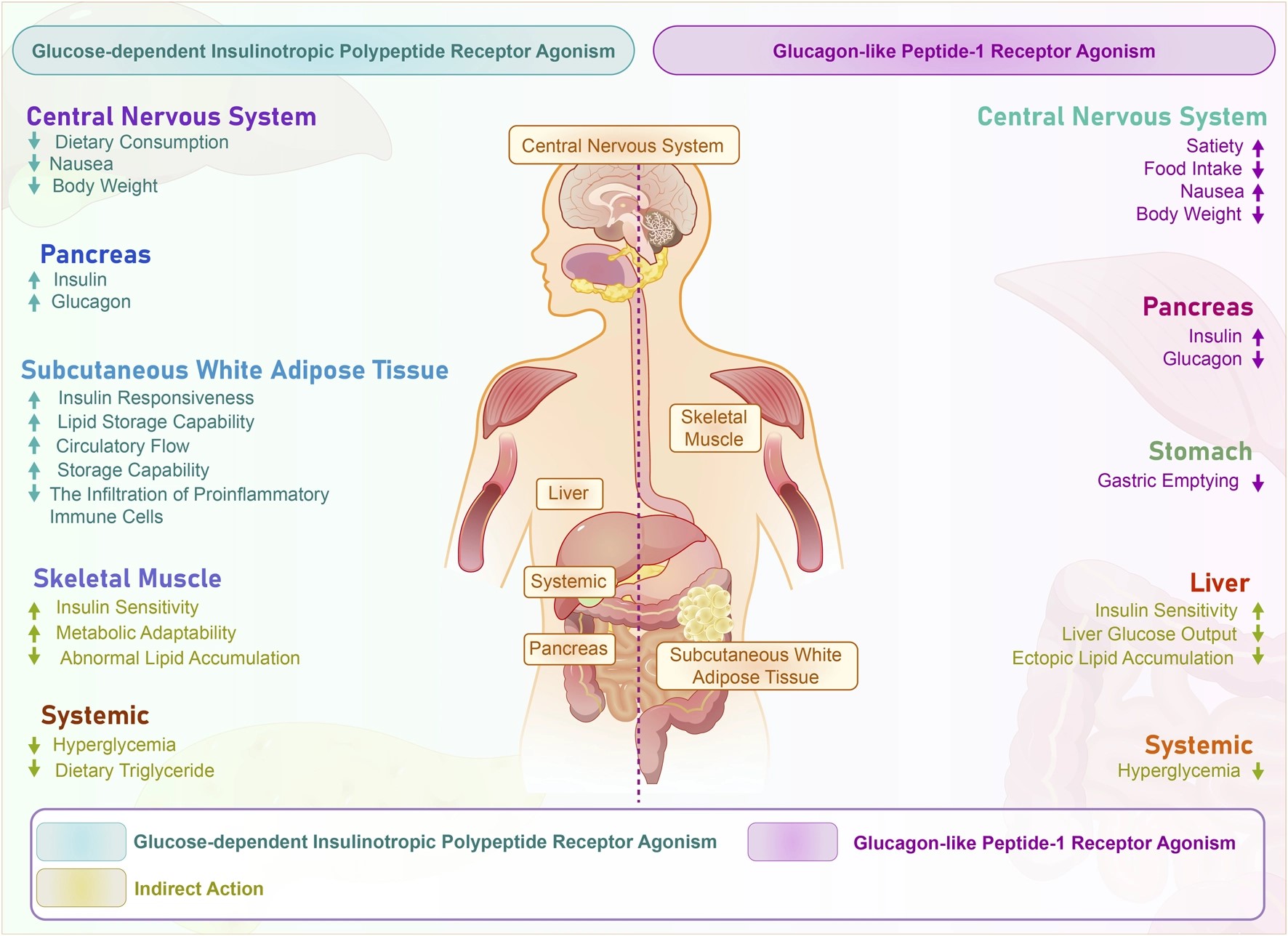
Tirzepatide binds GIPR with an affinity comparable to that of native GIP, but its affinity for GLP-1R is only about one-fifth of that of native GLP-1. This markedly higher affinity for GIPR results in preferential GIPR engagement, creating synergy between the two pathways rather than simple additivity. GIPR activation not only potentiates glucose-dependent insulin secretion but may also contribute to metabolic benefits through complementary peripheral pathways. While the precise role of GIPR signaling in adipose tissue remains under active investigation, the dual-target design enables synergistic engagement of both incretin pathways.
(2) "Biased" Signal Transduction
Unlike semaglutide, which recruits β-arrestin extensively, tirzepatide exhibits signaling bias at the GLP-1R—preferentially stimulating cAMP production while minimally recruiting β-arrestin—with substantially lower receptor internalization than native GLP-1. In primary human islets, β-arrestin1 limits GLP-1-induced insulin secretion; tirzepatide circumvents this limitation, thereby enhancing the insulin secretory response.
In summary, tirzepatide achieves superior glycemic and weight-loss efficacy despite its lower affinity for GLP-1R, through GIP-biased imbalanced receptor engagement combined with β-arrestin-sparing biased signaling.
III. Clinical Efficacy at a Glance
- Glycemic control: In the SURPASS program, tirzepatide (5–15 mg) achieved target HbA1c levels in 81%–97% of patients with type 2 diabetes.
- Weight loss: In the SURMOUNT-5 head-to-head trial, tirzepatide demonstrated a mean weight reduction of 20.2% over 72 weeks, versus 13.7% for semaglutide (P < 0.001).
- Obstructive sleep apnea: In SURMOUNT-OSA, tirzepatide over 52 weeks significantly reduced AHI, body weight, and cardiometabolic risk factors.
- Cardiovascular outcomes: A systematic review reported a significant reduction in MACE associated with tirzepatide (HR 0.79, 95% CI 0.69–0.91).
Related Research Products from AntibodySystem
For researchers working with tirzepatide and semaglutide, high-quality quantification and analytical tools are essential. AntibodySystem offers a portfolio of research reagents covering both drugs, including antibodies and ELISA kits.
| Catalog No. | Product Name |
|---|---|
| CHE40101 | Tirzepatide conjugated with BSA |
| KDK13903 | Tirzepatide (LY3298176) ELISA Kit-HS |
| KAK13902 | Anti-Tirzepatide (LY3298176) Human IgG ELISA Kit |
| PHK13902 | Anti-Tirzepatide Polyclonal Antibody |
| KDK13902 | Tirzepatide (LY3298176) ELISA Kit |
| DPE40102 | Research Grade Tirzepatide |
| YHK13901 | Recombinant Tirzepatide Protein, N-GST & C-His |
| YHK13902 | Recombinant Tirzepatide Protein, N-His-KSI |
| PHK13901 | Anti-Semaglutide (GLP-1 analogue) Polyclonal Antibody |
| KAK13901 | Anti-Semaglutide hIgG ELISA Kit |
| KAK13903 | Anti-Semaglutide Neutralizing Antibody ELISA Kit |
| KDK13901 | Semaglutide ELISA Kit |
| RHK13901 | Anti-Semaglutide (GLP-1 analogue) Antibody (SAb2274) |
| RHK13902 | Anti-Semaglutide (GLP-1 analogue) Antibody (SAb2275) |
| DPE40105 | Research Grade Semaglutide |
| DPE40106 | Research Grade CagriSema |


