Nanobodies vs. Conventional Antibodies: Understanding the Differences
Conventional IgG antibodies have been indispensable tools in biological research for decades. However, nanobodies are rapidly gaining attention as an alternative antibody format for applications where conventional antibodies may have structural limitations.
Their compact size, high stability, and unique binding properties have made nanobodies valuable tools in structural biology, live-cell imaging, virology, antibody engineering, and drug discovery.
What makes nanobodies different from conventional antibodies, and when should researchers consider using them?

What Is a Nanobody?
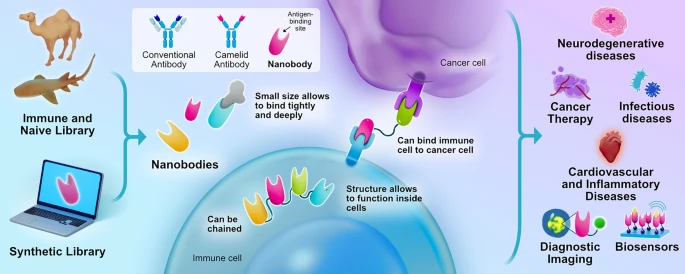
A nanobody, also known as a single-domain antibody (sdAb) or VHH antibody, is the antigen-binding domain derived from the heavy-chain-only antibodies naturally found in camelids, including camels, llamas, and alpacas.
Unlike conventional IgG antibodies, which contain two heavy chains and two light chains, heavy-chain antibodies lack light chains altogether. Their variable domain (VHH) is fully capable of recognizing target antigens while maintaining high affinity and specificity.
With a molecular weight of approximately 15 kDa, a nanobody is roughly one-tenth the size of a conventional IgG antibody (~150 kDa). Despite its small size, it retains excellent binding performance and can be readily engineered into a variety of antibody formats.

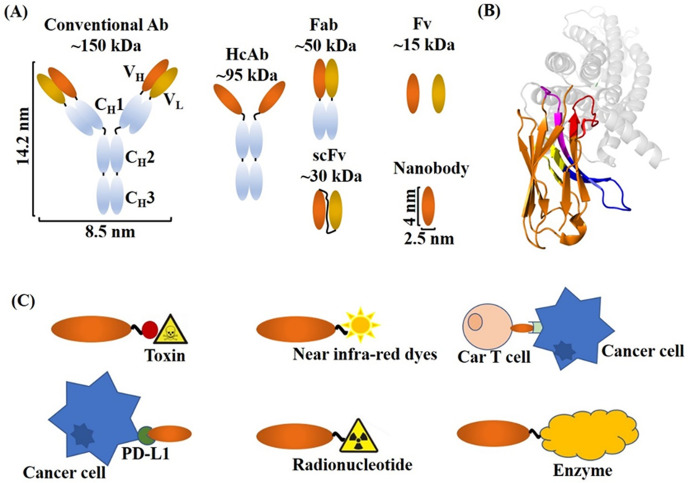
Depiction of Nb structure and their applications in cancer therapy and diagnosis. (PMCID: PMC8111546)
Why Are Nanobodies Becoming More Popular?
The growing interest in nanobodies extends far beyond their small size. Their unique structural features provide several practical advantages that make them attractive for both basic research and therapeutic development.
Improved Access to Challenging Targets
The compact structure of nanobodies allows them to diffuse more efficiently through dense tissues and crowded molecular environments than conventional antibodies in many experimental settings.
This characteristic is particularly valuable for applications such as:
· Structural biology
· Live-cell imaging
· Molecular imaging
· Solid tumor research
· In vivo target visualization
Although tissue penetration depends on multiple factors—including molecular size, affinity, target abundance, and circulation time—the small size of nanobodies often provides an advantage when accessing confined biological environments.

Discovery of nanobodies: a comprehensive review of their applications and potential over the past five years (DOI: 10.1186/s12951-024-02900-y)
Recognition of Cryptic Epitopes
One of the best-known advantages of nanobodies is their ability to recognize epitopes that may be difficult for conventional antibodies to access.
Many proteins contain recessed binding pockets, catalytic sites, or narrow structural grooves that can be partially shielded by steric hindrance. The relatively long and flexible CDR3 loop found in many nanobodies can enable access to some of these challenging regions.
For this reason, nanobodies have become valuable tools for studying:
· G protein-coupled receptors (GPCRs)
· Ion channels
· Viral surface proteins
· Conformation-dependent protein complexes
· Cryo-electron microscopy (Cryo-EM)
Their ability to stabilize specific protein conformations has also contributed significantly to advances in structural biology.
High Stability
Nanobodies generally exhibit excellent thermal and chemical stability compared with many conventional antibody formats.
Many nanobodies maintain their structural integrity after repeated freeze-thaw cycles or exposure to relatively harsh experimental conditions. This stability can improve experimental reproducibility while simplifying storage and transportation.
It should be noted, however, that stability varies among individual antibody clones and depends on sequence design and production methods.
A Flexible Platform for Antibody Engineering
The simple architecture of nanobodies makes them highly adaptable for protein engineering.
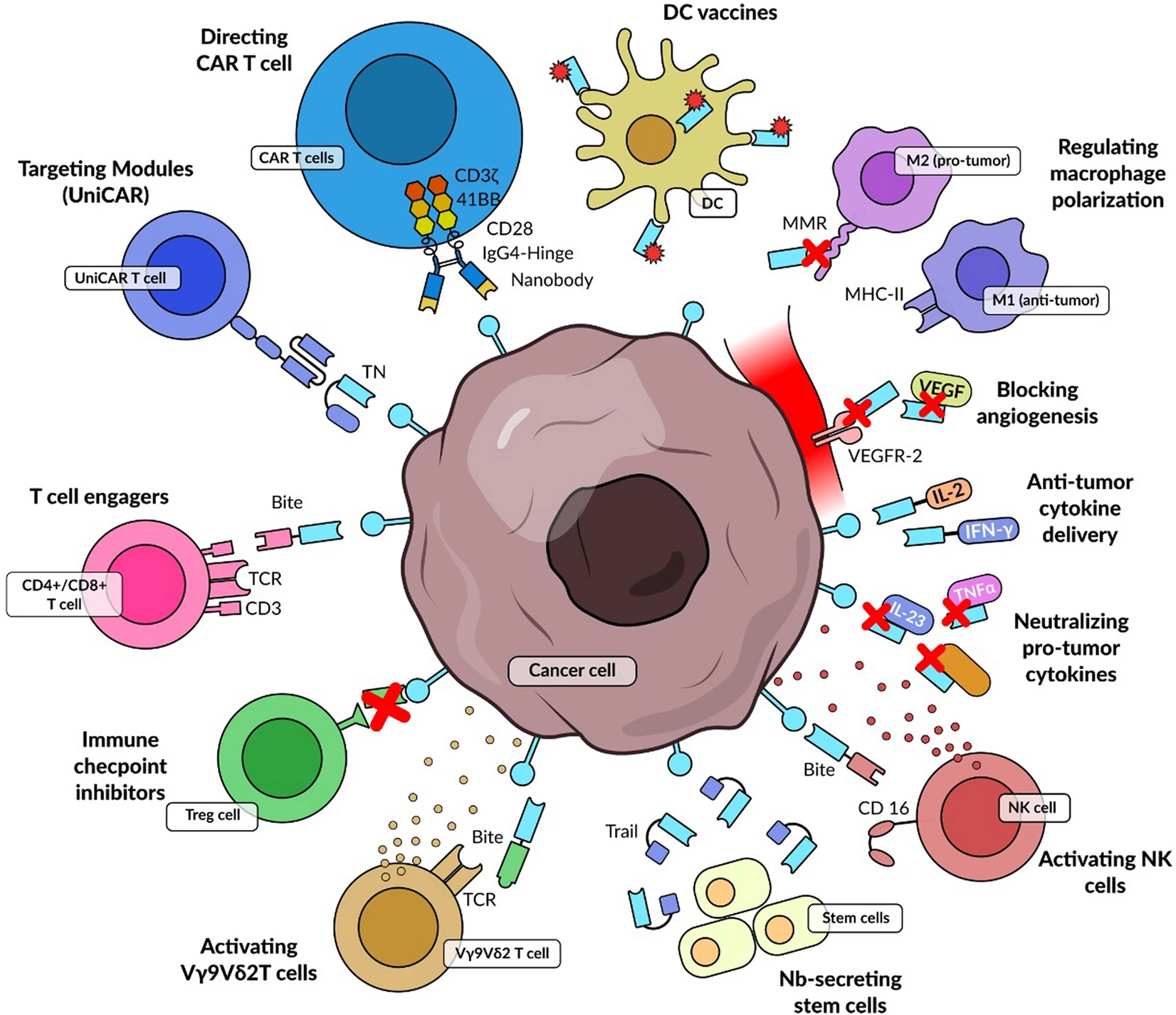
Today, nanobodies are incorporated into numerous engineered formats, including:
· Bispecific nanobodies
· Multivalent nanobodies
· Nanobody-Fc fusion proteins
· CAR-T antigen-recognition domains
· Antibody-drug conjugate (ADC) targeting modules
· Molecular imaging probes
· BioPROTAC-based targeted protein degradation systems
These engineered formats have expanded the role of nanobodies from research reagents to important components of next-generation therapeutic platforms.

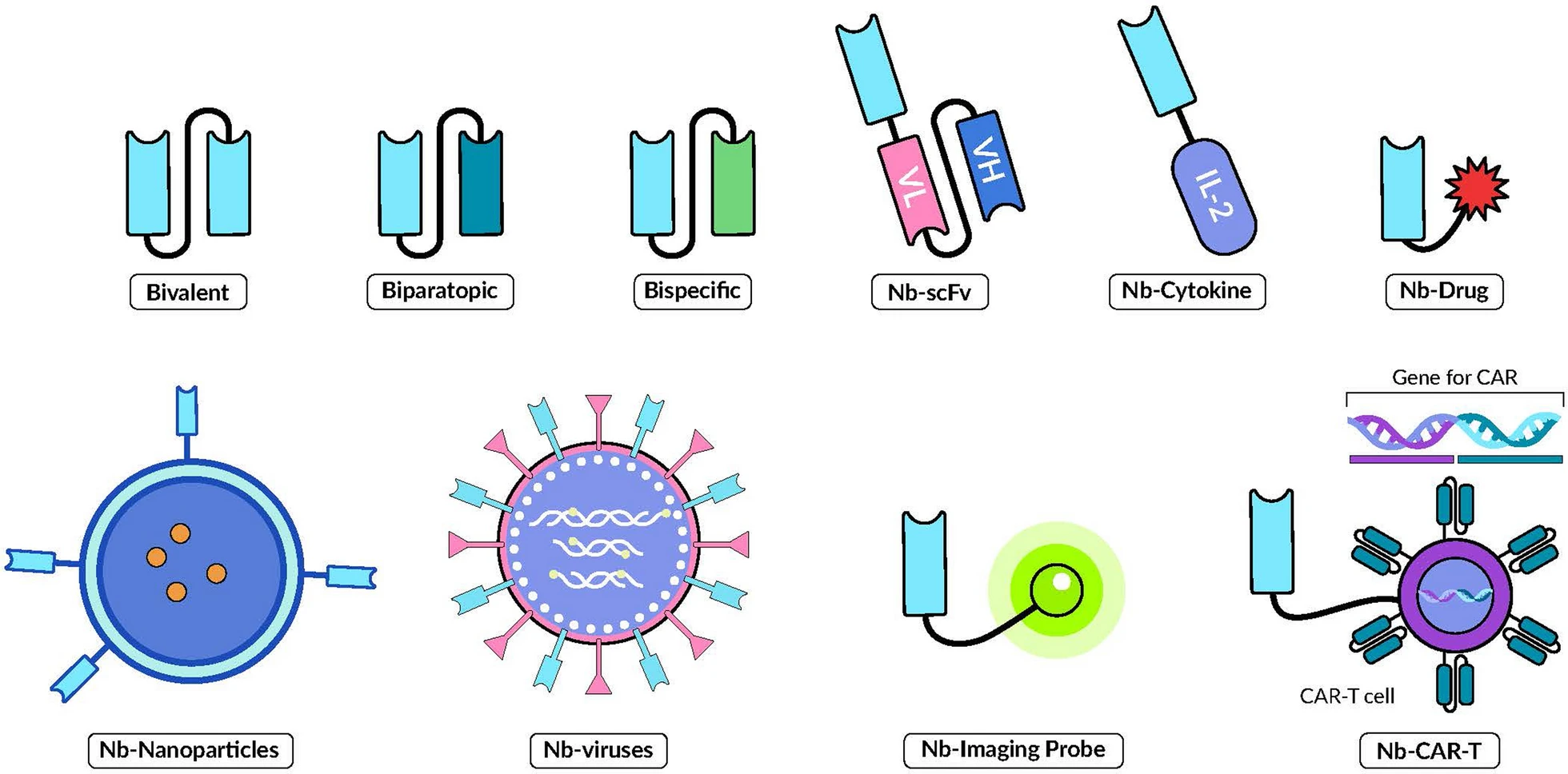
Schematic representation of the different types of engineered nanobodies (DOI: 10.1186/s12951-024-02900-y)
Nanobodies vs. Conventional Antibodies
Both nanobodies and conventional monoclonal antibodies bind target antigens with high specificity, but their structural differences result in distinct experimental characteristics.

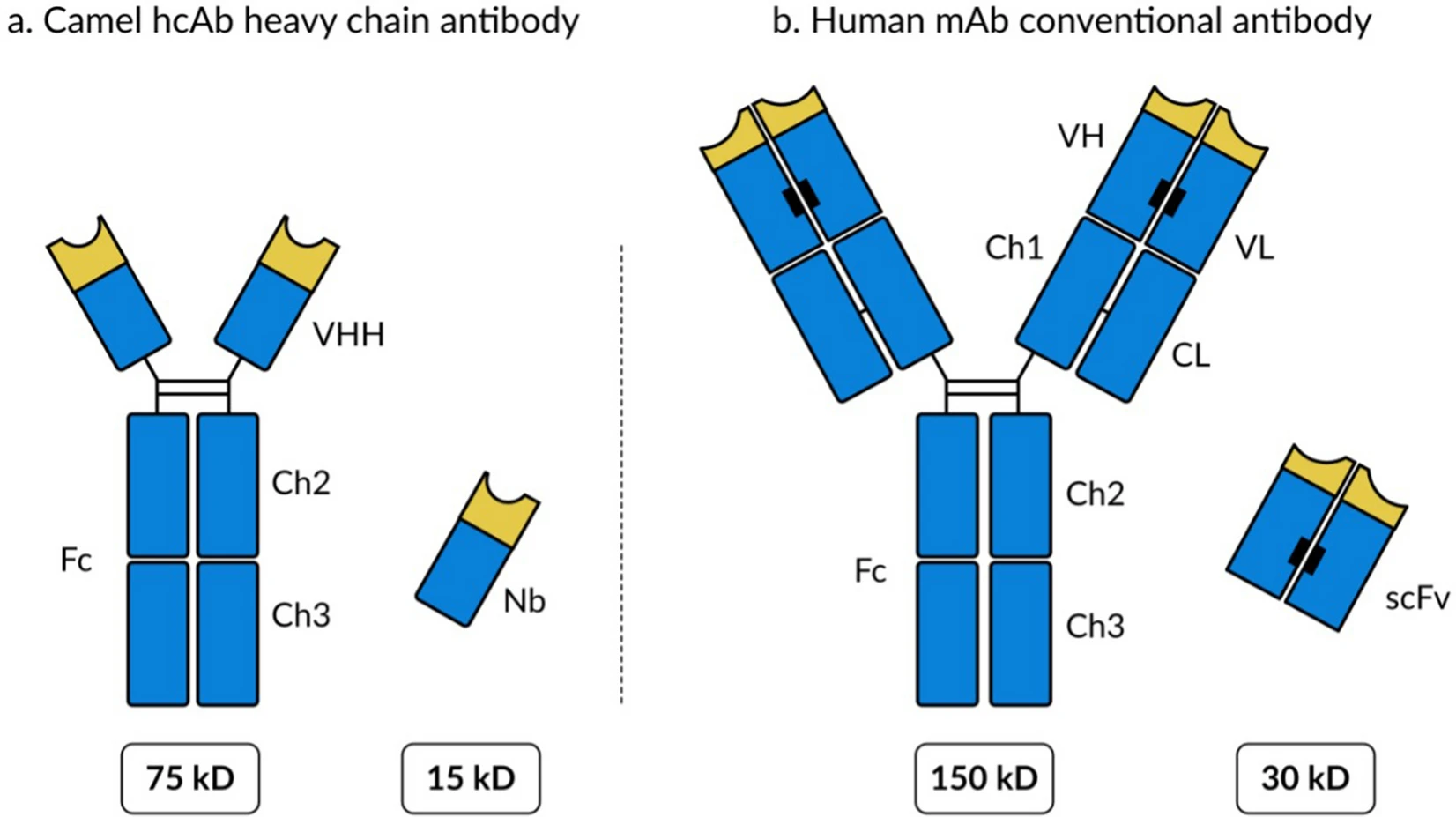
Key Structural Features of Nanobodies Compared to Conventional Antibodies (DOI: 10.1186/s12951-024-02900-y)
| Feature | Nanobody | Conventional IgG |
|---|---|---|
| Molecular weight | ~15 kDa | ~150 kDa |
| Basic structure | Single VHH domain | Two heavy chains and two light chains |
| Expression | Commonly produced in bacterial, yeast, or mammalian expression systems | Primarily produced in mammalian expression systems |
| Stability | Generally high | Variable |
| Tissue accessibility | Often improved in complex tissues | May be limited in some applications |
| Recognition of cryptic epitopes | Advantageous for some targets | May be limited by steric hindrance |
| Engineering flexibility | High | Moderate |
Rather than replacing conventional antibodies, nanobodies provide a complementary solution for research questions where their unique structural properties offer clear advantages.
When Should You Choose a Nanobody?
Nanobodies are often preferred for applications involving:
· Cryo-EM and structural biology
· GPCR and ion channel research
· Membrane protein characterization
· Live-cell imaging
· Viral protein research
· CAR-T engineering
· Antibody engineering
· Next-generation biologic development
Conventional IgG antibodies remain the preferred choice when native Fc-mediated immune functions—such as antibody-dependent cellular cytotoxicity (ADCC), complement-dependent cytotoxicity (CDC), or complement activation—are required.
However, engineered formats such as nanobody-Fc fusion proteins can combine the unique binding properties of nanobodies with Fc-mediated effector functions, broadening their potential therapeutic applications.
Ultimately, selecting the appropriate antibody format depends on the biological question, experimental design, and desired functional outcome.
Conclusion
Nanobodies have become an increasingly important class of affinity reagents in modern life science research.
Their compact size, robust stability, engineering flexibility, and ability to access challenging epitopes make them valuable tools for applications ranging from structural biology to therapeutic discovery.
As antibody engineering technologies continue to evolve, nanobodies are expected to play an even greater role in basic research, diagnostic development, and next-generation biologics.
AntibodySystem Nanobody Solutions
AntibodySystem provides a growing portfolio of high-quality nanobody products supporting research in oncology, infectious diseases, neuroscience, immunology, and cell and gene therapy.
Our nanobody solutions are validated for multiple research applications, including WB, IF, Flow Cytometry, ELISA, IP, neutralization assays, and Cryo-EM. In addition to off-the-shelf products, we also support antibody engineering and therapeutic discovery with reliable research tools designed to accelerate scientific innovation.
| Catalog No. | Product Name |
|---|---|
| RHB98602 | Anti-Human APOE Nanobody (SAA1224) |
| RHC19803 | Anti-Human GSN Nanobody (SAA1010) |
| RVV00139 | Anti-SARS-CoV-2 S Protein Nanobody (SAA0989) |
| RHC21004 | Anti-Human CD66e/CEA/CEACAM5 Nanobody (SAA1298) |
| RHC24202 | Anti-Human PSA/KLK3 Nanobody (SAA1220) |
| RHC26901 | Anti-Human ADRB2 Nanobody (SAA1252) |
| RHK18501 | Anti-Human CD8 Nanobody (SAA2076) |
| RHC27701 | Anti-Human CD3E Nanobody (SAA1330) |
| RVV15802 | Anti-DENV-2 NS1 Nanobody (DENV2P9) |
| RHC44601 | Anti-Human FURIN Nanobody (SAA1180) |
Customer Publications
Anti-Human EGFR/ERBB1/HER1 Nanobody (7D12) (Cat. RHB86908)
Nanodiamond-Mediated Targeted Delivery of Nanobodies and Immunostimulatory RNA for Breast Cancer Therapy
Anti-Human CRP Nanobody (SAA1358) (Cat. RHB99901)
Nanodiamond-Mediated Targeted Delivery of Nanobodies and Immunostimulatory RNA for Breast Cancer Therapy