
In late February 2026, highly pathogenic avian influenza (H5N1) was detected for the first time in northern elephant seals at Año Nuevo State Park, California. By mid-March, multiple seal pups had died, with infected individuals exhibiting neurological symptoms such as tremors, seizures, and convulsions. Preliminary analyses suggest that the virus carries mutations associated with enhanced adaptation to mammalian hosts.
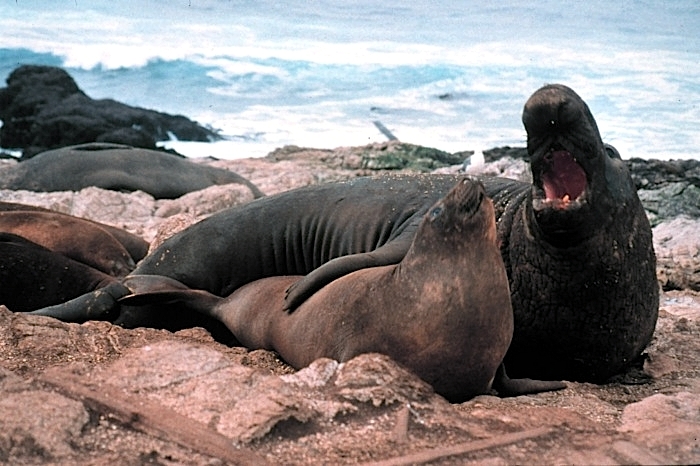
Northern elephant seal
This event is not isolated. Recent surveillance reports indicate increased avian influenza activity across multiple countries within a short timeframe, affecting both domestic poultry and wild bird populations. The spillover from birds to marine mammals highlights a continued expansion of the virus host range.
Why Cross-Species Transmission Matters
· Expanded host range: H5N1 is no longer restricted to avian species and has been detected in a growing number of mammals, increasing the complexity of transmission pathways.
· Gaps in surveillance systems: Current monitoring efforts primarily focus on poultry farms and migratory birds, with limited coverage of marine ecosystems and wild mammals.
· Viral adaptation: Emerging variants carrying mammalian-adaptive mutations may enhance replication or transmission in non-avian hosts, raising potential public health concerns.
Overview of Avian Influenza Virus
Avian influenza viruses (AIVs) belong to the Orthomyxoviridae family and are classified into subtypes based on hemagglutinin (HA) and neuraminidase (NA) surface proteins.
Highly pathogenic avian influenza (HPAI) is primarily associated with H5 and certain H7 subtypes, among which H5N1 remains the most prominent globally.
Virulence is largely determined by the HA cleavage site. Highly pathogenic strains contain a polybasic cleavage motif, enabling systemic viral replication across multiple organs.
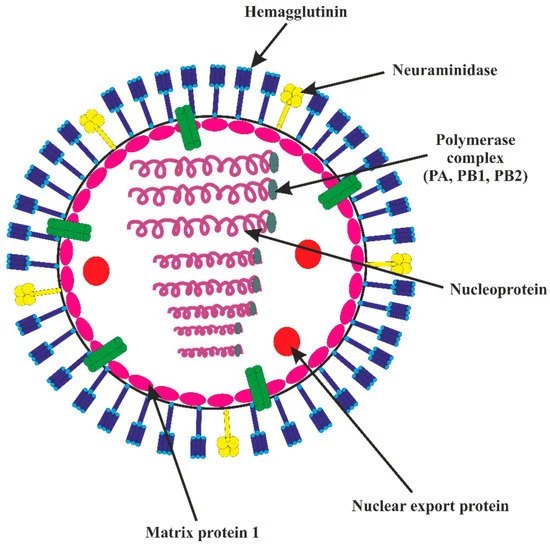
Schematic diagram of avian influenza virus (Vaccines. 2023, 11(3), 593)
Pathogenesis
The pathogenicity of avian influenza viruses is primarily driven by their surface glycoproteins and replication efficiency. Hemagglutinin (HA) mediates viral attachment and membrane fusion, enabling entry into host cells, while neuraminidase (NA) facilitates the release of newly formed virions and promotes viral spread.
In highly pathogenic H5N1 strains, the presence of a polybasic cleavage site in HA allows systemic replication across multiple tissues, leading to severe infection. In addition, certain variants exhibit enhanced replication efficiency in mammalian hosts, which may contribute to increased cross-species transmission potential.
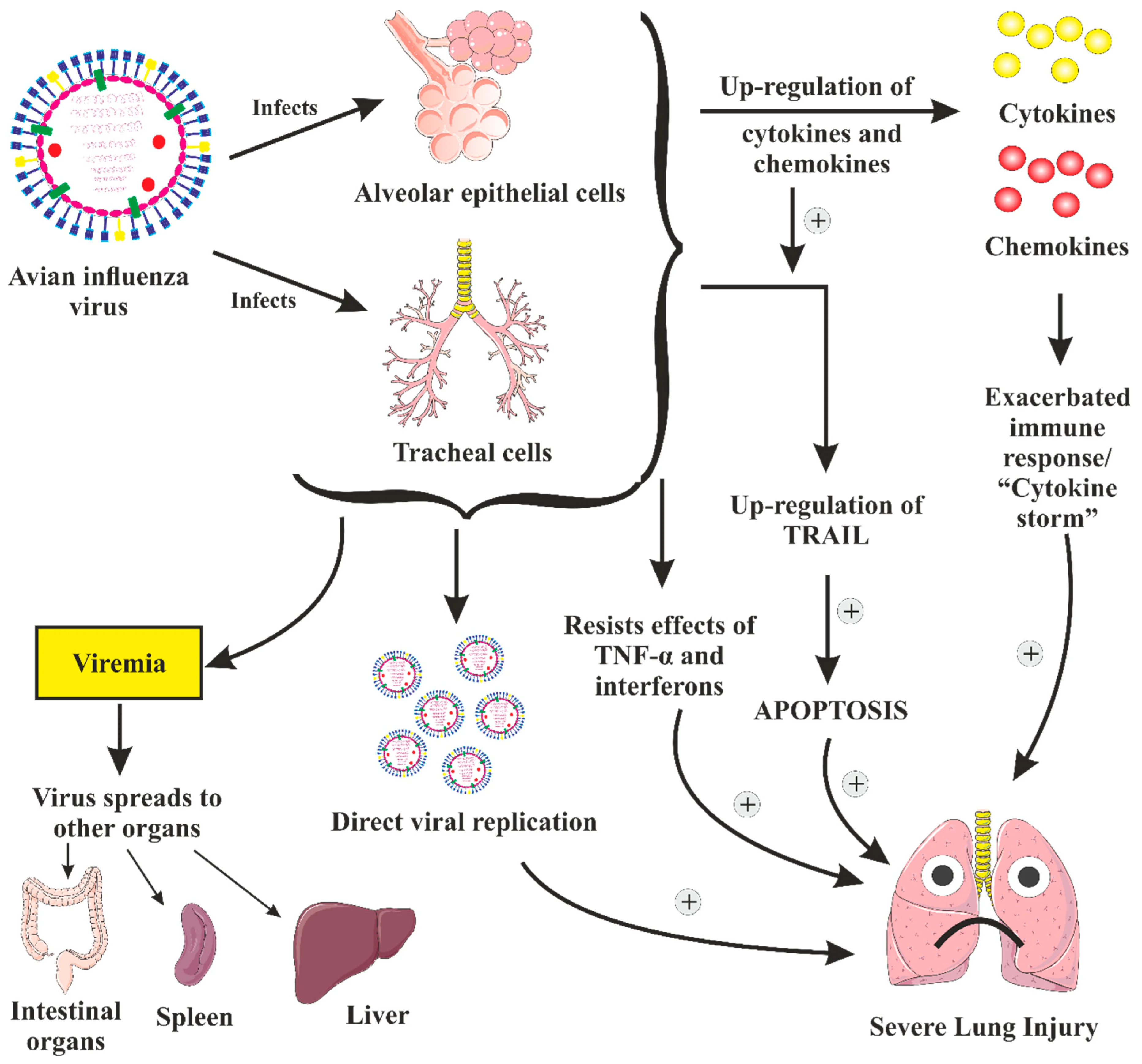
Pathogenesis of H5N1 virus infection (Vaccines. 2023, 11(3), 593)
Transmission and Clinical Features
Human infection typically occurs through:
· Direct contact with infected birds or contaminated environments
· Inhalation of virus-containing aerosols
· Consumption of undercooked poultry products
The virus is inactivated at temperatures above 70°C.
In humans, the incubation period ranges from 2 to 8 days. Clinical manifestations include high fever, cough, and myalgia, with severe cases progressing to viral pneumonia or acute respiratory distress syndrome (ARDS).
In marine mammals, the observed neurological symptoms suggest potential neurotropism of the virus.
Detection and Research Implications
Confirmation of infection in this event relied on a combination of molecular diagnostics (e.g., RT-PCR) and serological assays.
Antibody-based detection plays a critical role in:
· Evaluating vaccine-induced immune responses
· Assessing population-level exposure
· Identifying subclinical infections in wildlife
As the host range of H5N1 continues to expand, robust and sensitive detection tools are essential for both surveillance and research.
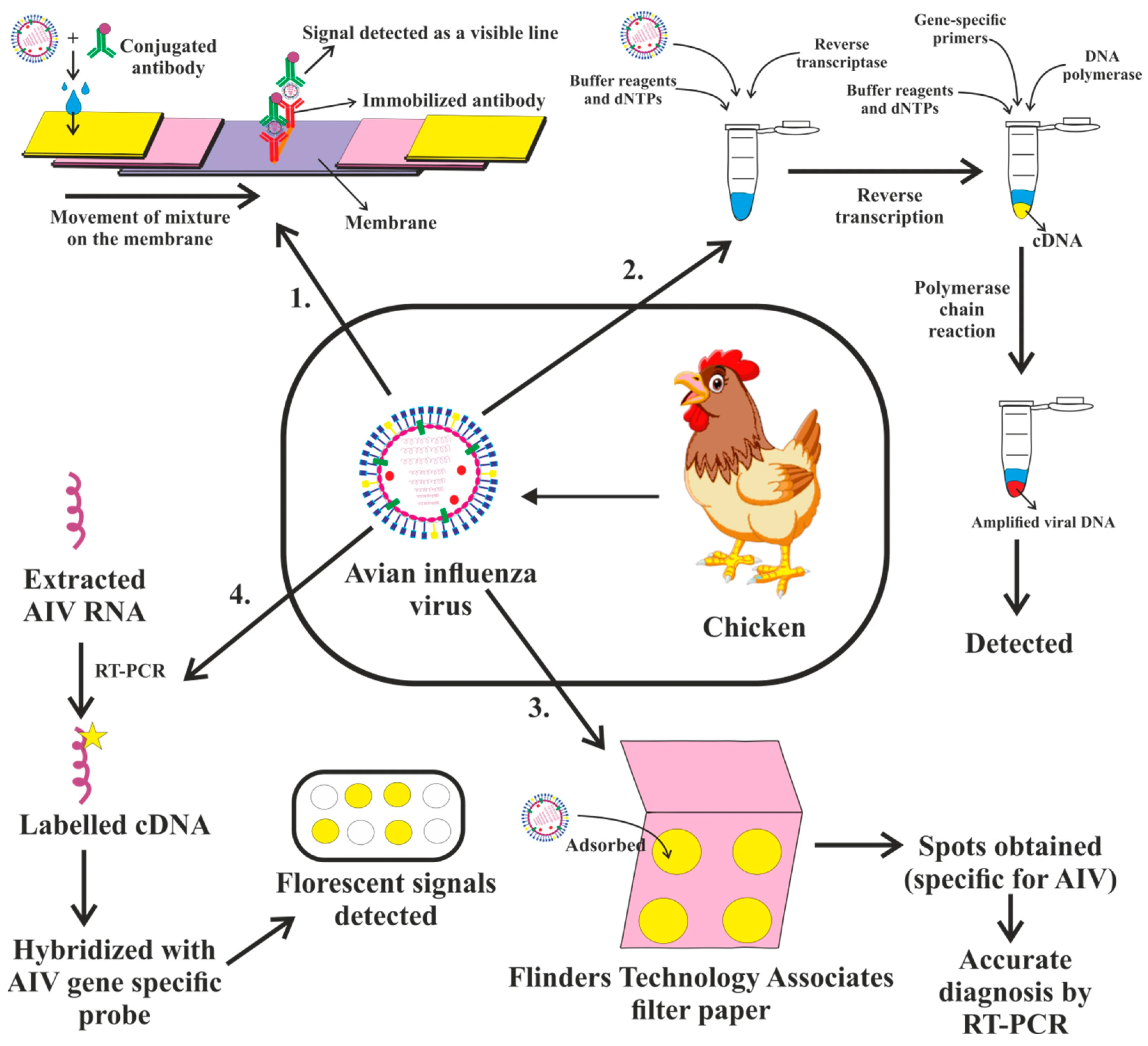
Different strategies for the detection of AIV (Vaccines. 2023, 11(3), 593)
AntibodySystem Solutions
AntibodySystem offers a comprehensive portfolio for avian influenza research, including: Recombinant proteins and antibodies. Supporting vaccine development, surveillance, and immunological studies worldwide.
Recombinant proteins
| Catalog | Product Name |
|---|---|
| YVV03813 | Recombinant Influenza A virus (H5N1) HA/Hemagglutinin Protein, N-His |
| EVV03805 | Recombinant Influenza A virus (H5N1) HA/Hemagglutinin Protein, C-His |
| YVV23404 | Recombinant Influenza A virus (H5N1) M2e Protein, N-GST & C-His |
| YVV23405 | Recombinant Influenza A virus (H7N9) M2e Protein, N-GST & C-His |
| YVV23406 | Recombinant Influenza A virus (H7N9) NF (CsgA)-3M2e Protein, N-His |
| YVV23407 | Recombinant Influenza A virus (H5N1) NF (CsgA)-3M2e Protein, N-His |
| YVV23410 | Recombinant Influenza A virus (H7N9) NR (N)-3M2e Protein, N-His |
| YVV23411 | Recombinant Influenza A virus (H5N1) NR (N)-3M2e Protein, N-His |
| EVV03803 | Recombinant Influenza A virus (H7N9) HA/Hemagglutinin Protein, C-His |
| EVV24001 | Recombinant Influenza A virus (H7N9) NA/Neuraminidase Protein, C-Strep |
Polyclonal Antibody
| Catalog | Product Name |
|---|---|
| PVV03801 | Anti-Influenza A virus (H5N1) HA/Hemagglutinin Polyclonal Antibody |
| PVV24010 | Anti-Influenza A virus (H5N6) NA/Neuraminidase Polyclonal Antibody |
| PVV24012 | Anti-Influenza A virus (H7N4) NA/Neuraminidase Polyclonal Antibody |
| PVV03814 | Anti-Influenza A virus (H7N7) HA/Hemagglutinin Polyclonal Antibody |
| PVV24001 | Anti-Influenza A virus (H7N9) NA/Neuraminidase Polyclonal Antibody |
| PVV03813 | Anti-Influenza A virus (H9N2) HA/Hemagglutinin Polyclonal Antibody |
| PVV33701 | Anti-PIV5 F/Fusion glycoprotein F0 Polyclonal Antibody |
| PVV33601 | Anti-PIV5 HN/Hemagglutinin-neuraminidase Polyclonal Antibody |
| PVV42401 | Anti-PIV5 NP/Nucleoprotein Polyclonal Antibody |
| PVV14601 | Anti-PIV5 Protein P Polyclonal Antibody |
Monoclonal Antibody
| Catalog | Product Name |
|---|---|
| DVV03801 | Research Grade Diridavumab |
| DVV03802 | Research Grade Firivumab |
| DVV03803 | Research Grade Navivumab |
| RVV24004 | Anti-Influenza A virus Neuraminidase/NA Antibody (Mem5) |
| RVV24005 | Anti-Influenza A virus Neuraminidase/NA Antibody (NA-63) |
| RVV24101 | Anti-Influenza A virus RNA polymerase complex Nanobody (SAA1427) |
| VVV03804 | InVivoMAb Anti-Influenza A virus HA/Hemagglutinin Antibody (Iv0149) |
| VVV03806 | InVivoMAb Anti-Influenza A virus HA/Hemagglutinin Antibody (FLD21.140) |
| VVV03807 | InVivoMAb Anti-Influenza A virus (H3N2) HA/Hemagglutinin Broadly Neutralizing Antibody (F045-092) |
| VVV24001 | InVivoMAb Anti-Influenza A virus Neuraminidase/NA Antibody (1G01) |


